

Start with the nameplate and service history
Begin with the basic identification details on the compressor and any receiver or dryer linked to it. Note the model, rated pressure, motor size, power supply, serial number and duty cycle if shown. That information helps a valuer form an opinion of value, but it does not guarantee a sale price or future performance. A machine with clear records is easier to assess than one with missing tags or unreadable plates.
Ask for service logs, repair notes and any records of element changes, oil changes, belt replacements or electrical work. A few dated invoices can show how the unit has been treated over time. If records are thin, inspect a bit more closely and assume more uncertainty in the valuation. In humid coastal areas like Durban and Gqeberha, also look for corrosion, rust on fasteners and moisture damage around filters and drains.
Check the compressor body, motor and drive
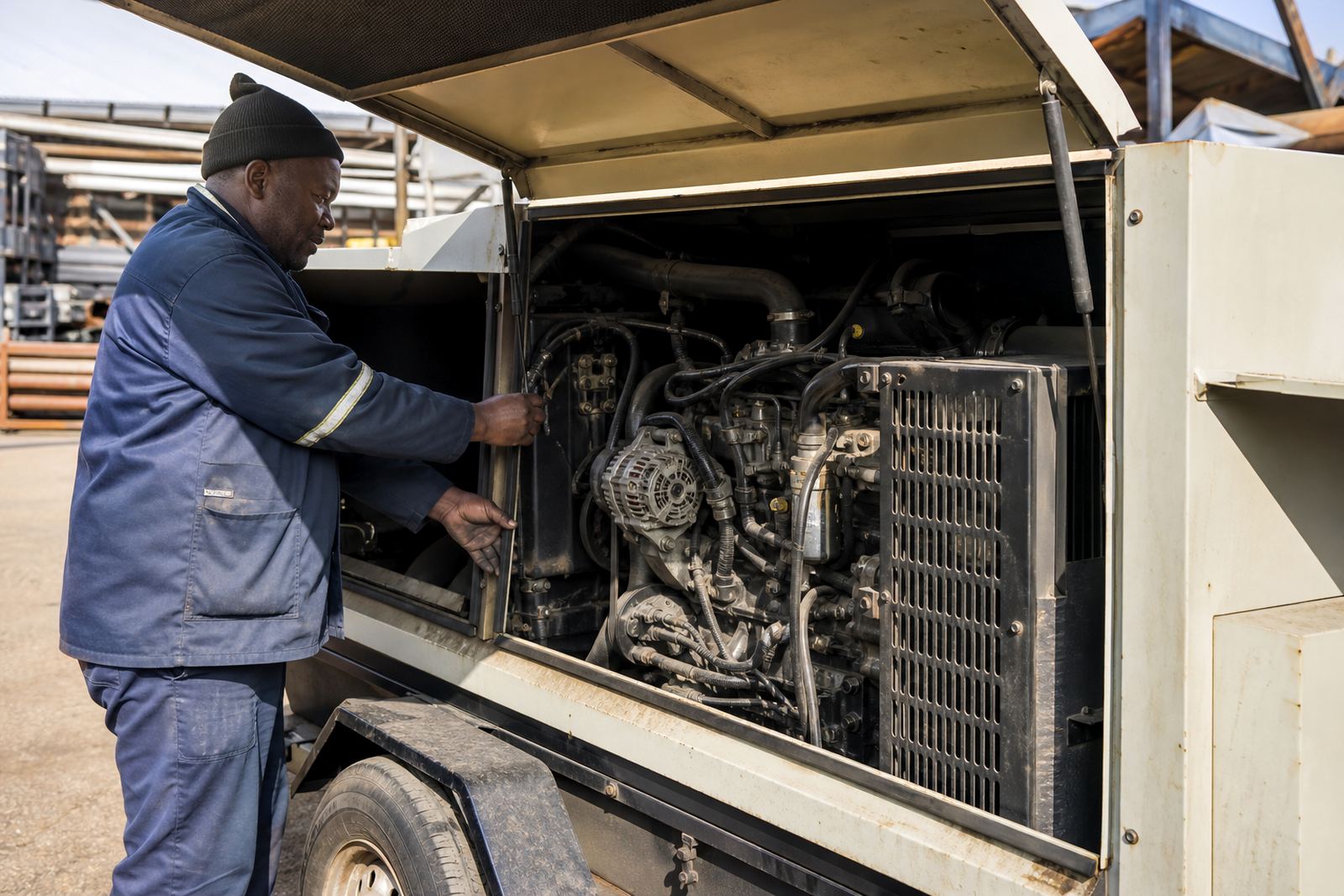
Walk around the unit and inspect the frame, guards, piping and mounting feet. Look for cracked welds, oil staining, loose bolts and signs of vibration. A compressor that has been moved often, or dragged across a rough floor, may have hidden wear in the base and alignment. If the machine sits outdoors, sun damage and dust can affect plastics, seals and cooling fins.
- Check for oil leaks around the sump, hoses, seals and fittings.
- Listen for abnormal knocking, rattling or high-pitched bearing noise when running.
- Inspect belts, pulleys and couplings for wear, glazing or misalignment.
- Look at the motor nameplate and confirm the supply matches the site.
- Check fan guards and cooling passages for blockage by dust or lint.
In factories with load-shedding exposure, ask whether the unit was stopped and started often. Repeated interruptions can shorten the life of contactors, starters and motors. A clean machine is good, but a clean machine with no operating proof needs careful handling during inspection.
Inspect the receiver and pressure controls closely
The receiver is one of the most important items on a compressed air system, yet it is often overlooked. Look for corrosion, dents, patched repairs and any sign that the vessel has been modified. Check the drain arrangement and the condition of the safety valve, pressure gauge and shut-off valves. If the receiver is mounted in a damp area, pay extra attention to the bottom seam and feet where water often collects.
Confirm that the pressure switches, regulators and gauges move properly and do not stick. A damaged gauge can mislead the operator and cause unsafe use. The receiver should be inspected for obvious leaks with the system pressurised, but the inspection should be carried out carefully and by people who understand compressed air equipment. Any sign of a swollen shell, deep pitting or old weld repair should be treated seriously.
Review air treatment gear for moisture, oil and dirt
Air treatment gear tells you a lot about how the compressor was used. Filters, dryers, separators and drains should be checked for service condition, clogging and signs of bypassing. A unit that ran with poor filtration may still work, but the downstream equipment may have suffered. For buyers, that means more than one item must be judged together, not just the compressor itself.
- Open filter housings and check for heavy oil residue or collapsed elements.
- Inspect refrigerated or desiccant dryers for obvious faults, alarms or water carryover.
- Check drains for blockage, stuck float valves or constant leaking.
- Look for dirty pipework and wet spots around the outlet line.
- Ask whether the air was used for packaging, spray work, tools or process lines.
If the system feeds sensitive equipment, the quality of the air matters as much as the pressure output. Moisture can damage valves, cylinders and instruments, especially where the system has been running through hot summers or in dusty areas. A complete view of the air path usually gives a fairer result than inspecting the compressor on its own.
Do a simple running check before valuation or bidding
If power and site conditions allow, a short running check is useful. Watch the startup, the time taken to build pressure, and whether the unit unloads and reloads properly. Listen for hunting, chattering, excess vibration or uneven running. A healthy compressor should come up to pressure in a steady way and then hold that pressure without constant cycling. If it struggles to start, the issue may lie with the motor, starter, control panel or pressure relief arrangement.
Note the noise level and heat build-up during the run. Excess heat can point to clogged cooling paths, worn internals or poor ventilation in the plant room. The machine should be turned off and rechecked for leaks after the test. It is also worth verifying whether the seller has isolated the system correctly before anyone stands near moving parts or pressurised fittings.
Prepare the unit properly for auction or sale
Good preparation supports a cleaner inspection and better buyer confidence. Drain the receiver, clean loose dirt from the frame, label disconnected lines and gather spare parts that belong with the unit. If manuals, wiring diagrams, maintenance logs or original accessories are available, keep them together. A tidy presentation makes lotting and cataloguing easier and helps buyers compare similar units fairly.
For sellers in Gauteng industrial areas such as Kempton Park, Germiston and Midrand, access planning matters too. Make sure the route is clear for lifting and collection, and check whether there are site rules for trucks, rigging teams or working hours. In some facilities, noise, dust and vehicle movement need to be managed around other tenants. A clear handover plan reduces delays and confusion on collection day.
Use a checklist before you commit
Before you bid or agree to buy, slow down and run through a final checklist. The aim is not only to find faults, but to understand what those faults mean for repair cost, downtime and future use. A used compressor can still be a sound purchase, but only if the inspection matches the application.
- Confirm the compressor type, pressure rating and power supply.
- Check the body, motor, receiver and control gear for wear or damage.
- Review service records and ask about previous breakdowns.
- Inspect filters, dryers and drains for moisture and contamination issues.
- Allow for transport, lifting and recommissioning costs.
- Get a valuation opinion based on condition, not assumption.
Machine Africa works with sellers and buyers across South Africa on on-site valuations, auction planning, plant appraisals, viewing days and closure support. Our team in Kempton Park handles industrial machinery in a practical way, with attention to condition, access and the realities of moving equipment between provinces. If you need a clear opinion before you sell or bid, start with a proper inspection and good records.