Start With the Generator Type and Duty Needs
Begin by matching the set to the job it must do. A generator for a workshop in Kempton Park that runs lights, small tools and office equipment is not the same as a unit expected to carry refrigeration, pumps or production machinery through load-shedding in Pretoria or Durban. Ask what the unit was used for, how often it ran, and whether it served as standby power or as a regular working set.
The engine size, alternator rating and control panel should all make sense together. If the seller cannot explain the rated output in kVA or kW, or if the nameplate is missing, treat that as a warning. An opinion of value depends on condition and suitability, not just age, and a clean-looking set can still be underpowered for the task.
- Confirm the rated output and voltage
- Check whether it is single phase or three phase
- Ask what load it carried and for how long
- Look for signs of hard emergency use or long idle periods
Walk Around the Frame, Canopy and Mounting Points
A proper inspection starts with the outside. Check the frame for bends, rust, broken mounts and oil stains. On coastal units from Cape Town or Gqeberha, salt air can leave surface corrosion on the canopy, hinges and fixings, so look carefully around seams and cable entry points. A set that has been moved often may show forklift marks, cracked feet or loose vibration mounts.
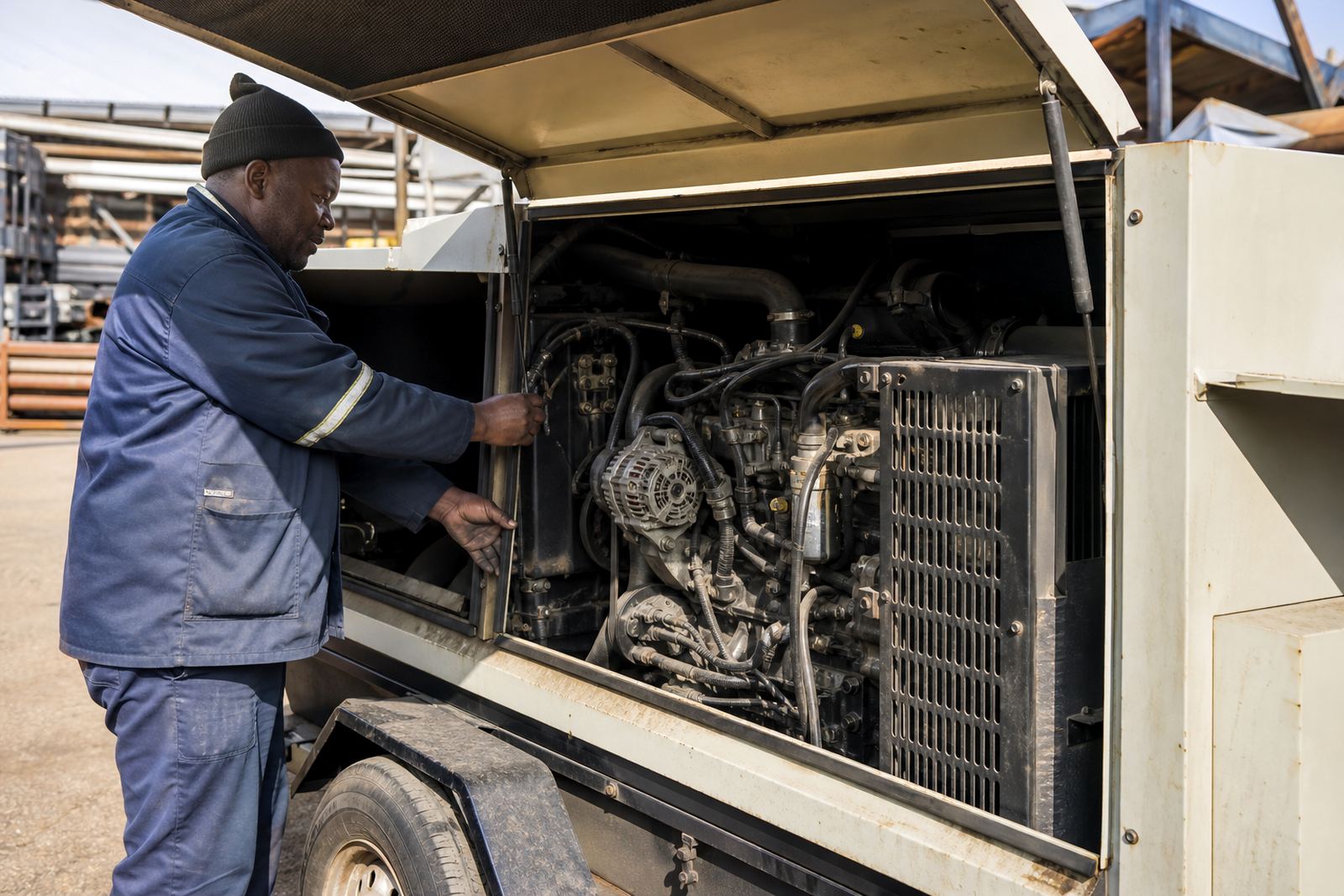
Open the access doors and look for missing fasteners, poor repairs and signs of water entry. If the unit sits outside, ask how it was protected from rain, sun and dust. A generator stored under cover in Midrand will usually show less weather wear than one left exposed in an open yard, though poor maintenance can still undo that advantage.
- Inspect the base frame and lifting points
- Check doors, locks and hinges
- Look for fuel leaks, oil seepage and coolant staining
- Examine labels, warning plates and serial markings
Check the Engine, Fluids and Starting Condition
The engine tells you a lot before it is ever started. Look at oil level and colour, coolant condition and any signs of fuel contamination. Thick sludge, milky oil or low coolant can indicate neglect or a hidden fault. Belts should sit properly, hoses should feel sound and clamps should not be rusted through. On older units, perished rubber is common, and small cracks can become a breakdown once the generator is put back into service.
Ask for a cold start if possible. A healthy engine should start cleanly without long cranking, heavy smoke or uneven running. Listen for knocking, hunting, excessive vibration or warning lights. Let it warm up and check whether it holds stable speed and frequency. Do not ignore small problems, because they often become bigger once the unit is expected to carry load. If the engine has been standing for months the first start may need care, but it should still behave predictably.
- Look at oil, coolant and fuel condition
- Check belts, hoses and clamps
- Watch for smoke, leaks and vibration on start-up
- Listen for irregular running under idle and light load
Review the Alternator, Panel and Controls
The alternator and panel should be clean, complete and readable. Check for damaged wiring, loose terminals and burnt insulation. Any signs of overheating around the breaker, contactor or busbar need close attention. If the control panel has been altered, bypassed or patched, ask why. Missing metres or broken selectors make it harder to verify the set later, especially when it is tied into a municipal or private installation that must comply with site rules.
Test the basic controls where possible. Emergency stop, start stop functions, fault indicators and transfer related controls should respond properly. Ask whether the set has been load tested and when that test was done. A unit that has not been exercised may appear fine but fail once it has to carry a full site load during an outage. In South Africa, that matters when a business has to bridge load-shedding or keep essential equipment online.
- Inspect wiring, terminals and breakers
- Confirm the panel is complete and legible
- Test start, stop and emergency functions
- Ask about load testing and maintenance intervals
Look for Service Records and Practical Maintenance Clues
Paperwork helps, but only if it matches the machine in front of you. Service logs, parts records and repair notes should show dates, running hours and the work done. A well-kept file often reveals whether the unit received regular oil changes, filter swaps and coolant checks. If the hours on the metre do not line up with the condition of the engine, ask questions. A generator with 800 hours should not look like one that has worked every day for years.
For auction planning and valuations, records help define condition, but they do not guarantee sale price or future performance. They simply support an informed opinion of value. Missing records are not unusual in older industrial equipment, yet they do mean the inspection must carry more weight. If you are buying for a plant in Johannesburg or Germiston, make sure you also understand access for installation, exhaust routing and any local compliance needs before you commit.
- Match the hour metre to the condition
- Check service dates and repair notes
- Ask when filters, belts and fluids were last changed
- Note any repeated faults or major repairs
Plan a Viewing Day That Tests Real Use
If you can, see the generator under a proper viewing arrangement before any final decision. View it with enough time to inspect, start and, where possible, test under load. Bring a checklist, a torch and someone who understands your expected load. For buyers coming from Pretoria, Cape Town or Durban, it is worth planning for travel time so the inspection is not rushed. A rushed look often misses small faults that become expensive later.
Check site access too. A generator may be sound, but if it is too wide for the access road, too heavy for the floor loading or awkward to remove from a crowded yard, the real cost goes up. This matters in clearance sales and collection coordination, where timing, lifting gear and safe removal all have to line up. Machine Africa often sees the best outcomes when buyers know what they need before the lot goes under the hammer.
- Arrange a clear viewing with enough time
- Take someone who understands electrical and mechanical loads
- Check access for transport, lifting and installation
- Confirm the unit suits your site before bidding or offering
Use the Inspection to Judge Value, Not Just Appearance
A good valuation balances condition, records, age, usage and market demand. It is an opinion of value based on what can be seen and verified, not a promise of what a buyer will pay. A tidy generator with weak output, tired batteries or a worn alternator may be less useful than a rougher unit with strong running gear and sound records. The point is to compare the practical state of the machine, not only the paint.
If you are selling, clear information helps the market understand the set. If you are buying, ask for honest detail and inspect carefully before making any purchase decision. For businesses across South Africa, from Kempton Park to Cape Town, a generator is often bought to keep operations moving when power is uncertain, so the check has to be practical, detailed and real. That is where a careful inspection pays off.
- Weigh condition against age and hours
- Factor in missing parts and repairs needed
- Use the inspection results to guide your offer or reserve
- Keep the focus on working ability, not appearance alone