Start With the Oven Type and Working History
Before you inspect anything physical, identify the oven type and how it was used. A deck oven, rack oven or chamber oven will show wear in different places, and the job the oven did matters just as much as its age. An oven that baked bread through long shifts will often have different wear from one used for pastries, pies or occasional production. Ask what products were baked, how many shifts ran, and whether the unit sat idle during load-shedding or power cuts.
Ask for the current setup details as well. Check whether the oven runs on electricity, gas or a mix, and whether it was used in a hot, humid inland plant or in a coastal area where corrosion can move faster. In Gauteng, dust and heat cycles can affect seals and fans. Near the coast, look harder at rust, pitting and tired hinges.
- Confirm the oven type and number of chambers or decks
- Ask what products were baked and how often
- Check whether the unit was used daily, weekly or only at peak times
- Note any downtime linked to power supply, gas issues or repairs
Inspect the Chamber, Decks and Internal Surfaces
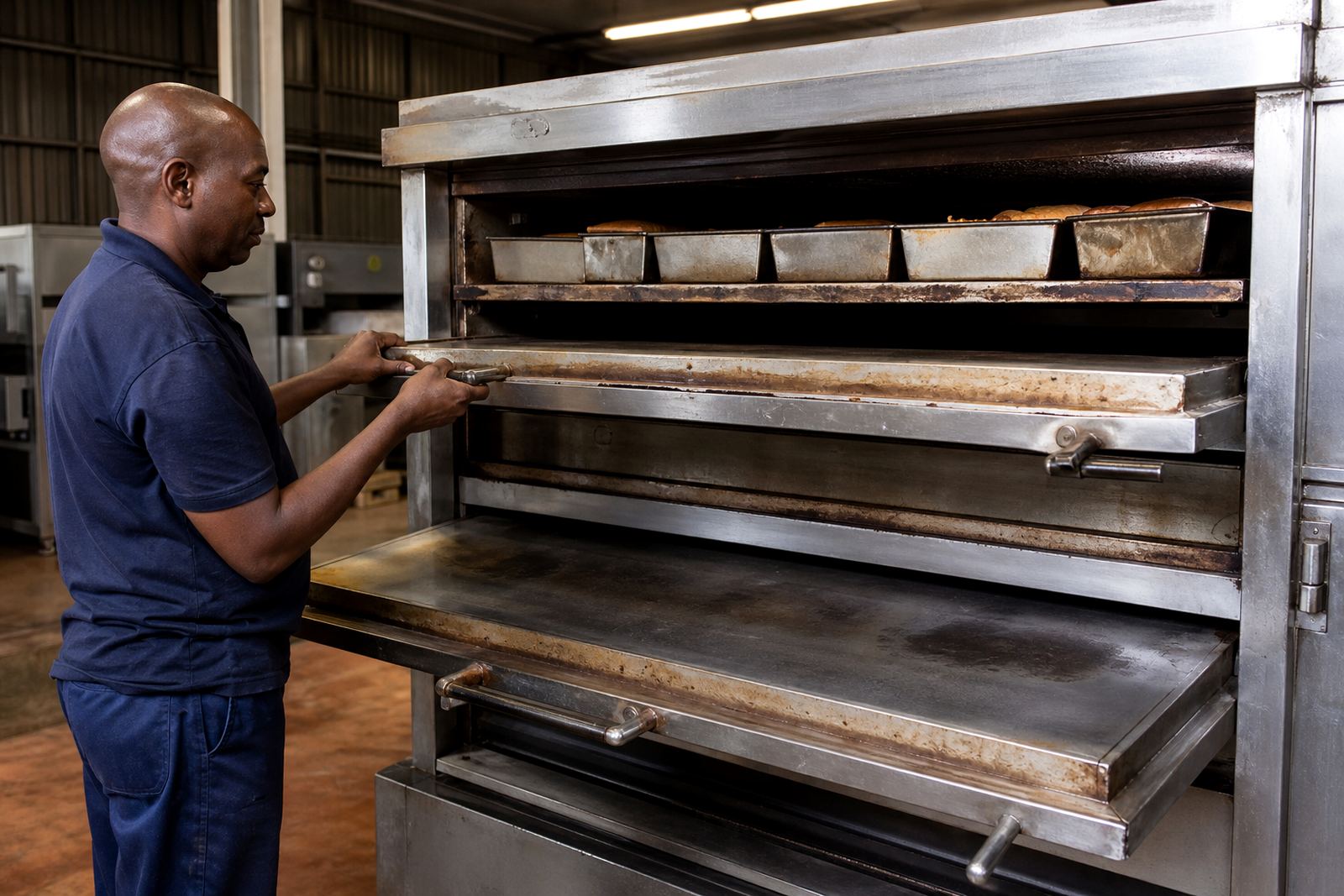
The chamber is where most of the real story sits. Open the doors and look inside with a torch. You want to see even surfaces, no heavy flaking, no obvious hot spots, and no damaged lining around the sides or roof. Surface staining is normal on a used oven, but deep rust, cracked refractories or warped sections point to repair work ahead.
For deck ovens, check each deck surface for chips, uneven wear and hot or cold patches. If the decks are stone or another heat-retaining surface, look for cracks, loose sections or obvious patching. In older ovens, repeated heat cycles can cause the lining to move slightly or the chamber to lose evenness. That can affect bake quality and recovery time.
- Look for cracks, chips and flaking inside the chamber
- Check for signs of heat fatigue around corners and joints
- Inspect deck surfaces for evenness and surface damage
- Watch for soot build-up or burnt residue that suggests poor cleaning
Check Doors, Seals and Hinges Carefully
Doors tell you a lot about how the oven was treated. Open and close each door slowly. It should move smoothly, lock properly and sit square. If the door drags, rattles or does not close tightly, heat loss is likely. That can waste energy and make temperature control difficult, which is costly in a busy bakery.
Inspect the seals around the doors for brittleness, gaps or flattening. On older units, seals often harden from constant heat. Check hinges, catches and handles for play or damage. A door that has been forced open or slammed during long shifts may show bent hardware or wear marks around the frame. That is a sign to budget for servicing before the oven is put back into production.
- Test every door for smooth movement and a firm close
- Check seals for cracks, gaps or hardening
- Inspect hinges, latches and handles for wear
- Look for scorched areas around the frame and gasket line
Test Heat Recovery, Controls and Temperature Consistency
Temperature consistency is one of the most important checks on any used bakery oven. If possible, ask for a live test. Watch how quickly the oven reaches set temperature and whether it holds that setting without wide swings. Slow recovery between loads can point to worn elements, poor insulation or weak burners. That matters when production is tight and every batch must stay on schedule.
Check the controls, indicators and timers. Make sure buttons, knobs or digital panels respond correctly and that readings make sense. If the oven has multiple zones, test each one. Uneven heat across the chamber can mean a repair job or a bake pattern that no longer suits commercial use. Small variations are normal, but big differences should be noted and costed before buying.
- Ask for a live heating test where possible
- Check how fast the oven reaches temperature
- Watch for uneven readings across decks or zones
- Confirm that timers, switches and displays work correctly
Look for Wear from Heat, Steam and Cleaning Chemicals
Bakery ovens are exposed to repeated heat, steam, sugar dust and cleaning agents. Over time this can weaken metal, dull finishes and affect moving parts. Look behind panels where you can, and check around vents, fan areas and access points. Heat discolouration is common, but heavy corrosion or soft metal is a warning sign.
Pay attention to the smell as well. A stale burnt smell, chemical residue or signs of lingering grease can mean the oven was not maintained properly. In humid coastal conditions, condensation can speed up rust if the unit was stored in a poorly ventilated space. In inland storage areas, dust and flour build-up can block airflow and put extra strain on components.
- Check for rust around vents, corners and fixing points
- Look for damage caused by steam, grease and harsh cleaning products
- Inspect fan covers and ventilation openings for blockage
- Note any signs of poor storage or moisture exposure
Use a Simple Pre-Bid Checklist Before You Buy
Once the physical inspection is done, compare what you saw with the seller’s description and any inspection notes. A bakery oven should be judged on usable condition, not just appearance. If the chamber is sound, the doors close properly and the heat test is acceptable, the unit may be a practical option. If several parts need attention, make sure you understand the time and cost involved before bidding or making an offer.
For buyers in Johannesburg, Pretoria, Durban, Cape Town, Gqeberha and the greater Gauteng area, it helps to plan for transport, access and installation too. Large ovens may need lifting gear, door removals or route checks at the site. Clear measurements, proper collection planning and a good handover save a lot of trouble later.
- Match the oven condition against the seller description
- Confirm measurements, power or gas requirements and site access
- Allow for transport, lifting and installation needs
- Check whether any parts will need servicing before first use