What counts as utility plant in a disposal?
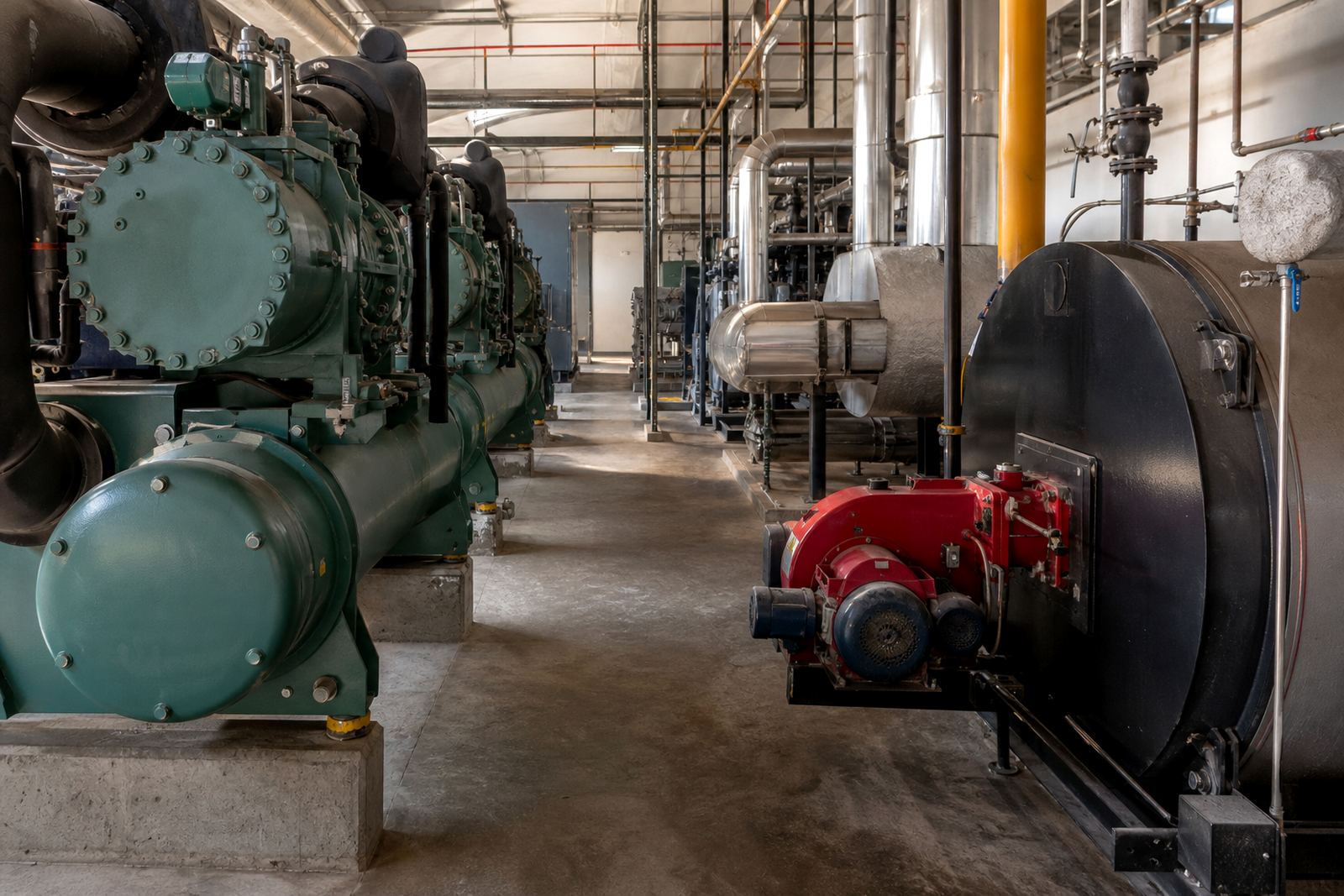
Utility plant is the equipment that keeps a site running even when it is not the main production line. In many factories and warehouses this includes air compressors, water chillers, steam boilers, pumps, heat exchangers, generators, dryers, tanks, pipework and control panels. These items often support production, cleaning, temperature control or compressed air distribution, so they can carry real value even when the main business is closing or upgrading.
When a seller is disposing of utility plant, the first step is to separate what is fixed to the building from what can be removed and sold. A boiler room with ancillaries, a chiller plant on a roof, or a compressor room with receiver tanks and filtration units all need to be checked carefully. Access, lifting points, electrical isolation and municipal or landlord conditions can all affect the process.
How a valuation is approached in practice
A valuation is an opinion of value based on the condition, age, make-up and market demand for the asset at a given time. It is not a guarantee of sale price, and it should not be treated as a promise of what the market will pay. For utility plant, the valuer will usually look at visible condition, service history if available, installation quality, running hours where applicable, and whether the asset can be dismantled and moved without excessive cost.
At our Kempton Park base, our team led by Pieter van der Merwe on valuation work looks closely at items that have been modified over the years. A compressor may have had parts replaced, a chiller may be partly stripped, or a boiler may be out of service but still complete enough to attract interest. That detail matters. Buyers want to know if the asset is complete, testable and fit for re-use, while sellers need a realistic view before they commit to a disposal route.
- Model details, serial plates and capacity markings where available
- Physical condition, corrosion, leaks, damage and missing parts
- Power requirements, fuel type and installation footprint
- Removal difficulty, crane access and transport considerations
- Local demand in Johannesburg, Pretoria, Durban, Cape Town and Gqeberha
Why auctions suit compressors, chillers and boilers
An auction can work well for utility plant because it brings buyers into one process and gives the market a fixed opportunity to bid. That is useful when a seller wants a clean disposal or needs to clear a site by a certain date. It can also help when there are mixed assets on one property, such as plant room items, workshop support equipment and spare parts that may be more valuable together than sold one by one.
In practice, the auction process starts with lotting and cataloguing. Assets are grouped in a way that makes sense for buyers, and each lot needs a clear description. Photo listing prep is important because many buyers will first inspect a chiller, boiler or compressor online before deciding to attend a viewing day. For sellers, that means the record must be honest and detailed. Poor descriptions can lead to confusion and slower bidding.
- Separate major plant from smaller support assets
- List missing controls, panels, gauges or pipe sections clearly
- Use viewing days to show the true condition, not just the best angle
- Allow time for questions from buyers who may need to move equipment interstate
Preparing a site before the viewing day
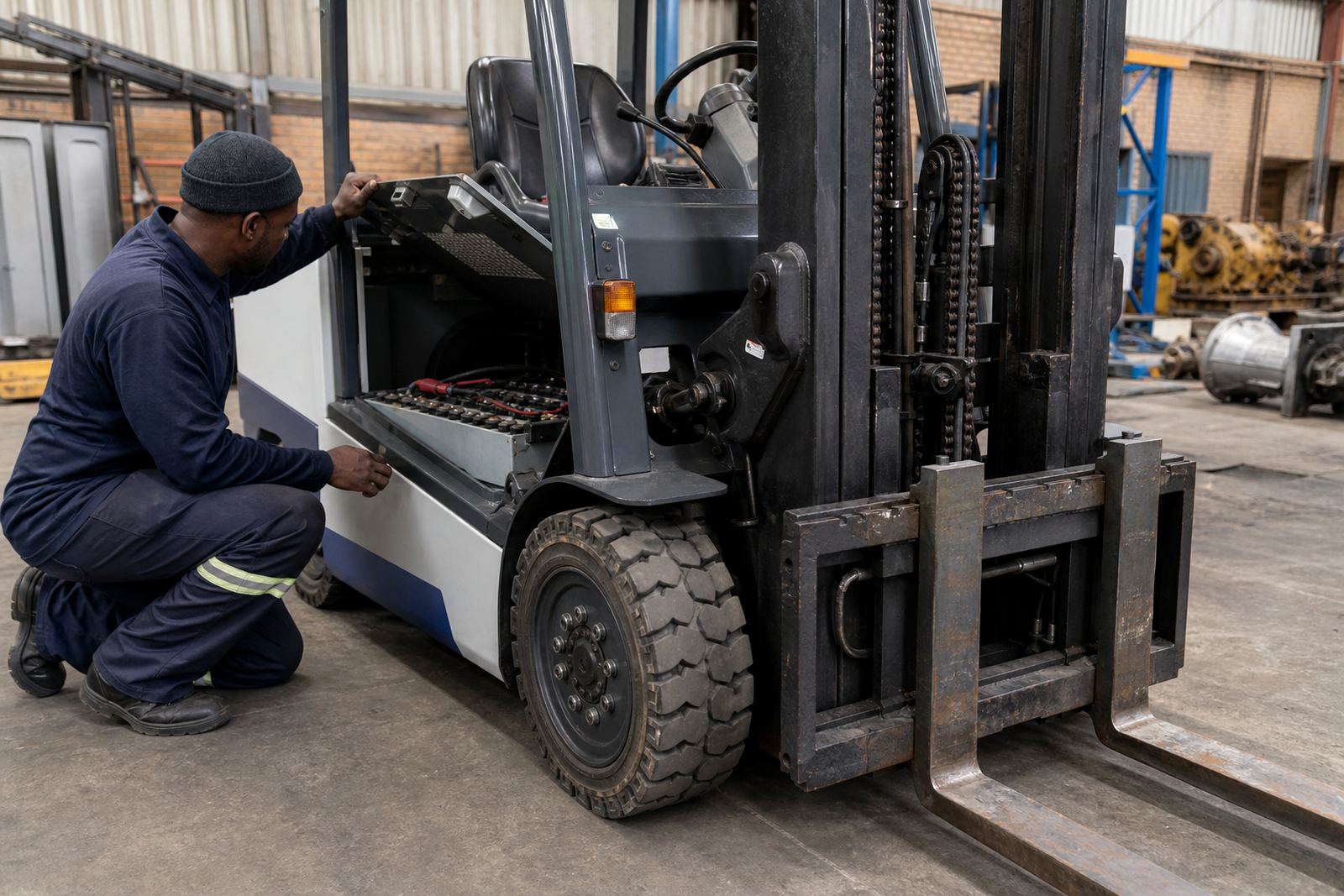
Good preparation is often what makes the difference between a tidy disposal and a difficult one. A site with a boiler house, compressor bank or chilled water plant should be made safe before buyers arrive. That means isolating power, draining systems where required and making sure access routes are clear. In coastal places like Durban or Gqeberha, humidity can make corrosion worse, so rusted bases, flaking insulation and seized fittings may need special attention. In Gauteng, dust and long periods of idle time can also leave equipment looking worse than it is.
Our operations coordinator Thabo Molefe works with site logistics, while Johan Botha handles practical movement planning where lifting and loading are involved. Sellers often underestimate how much time is needed for clearance sales or closure support. If there are overhead obstructions, narrow gate access or shared yard rules, those details should be mapped out before collection coordination begins. Load-shedding can also affect inspections, lighting and test runs, so it is worth planning around it rather than hoping the schedule will hold on its own.
A local example from Kempton Park to the wider market
Consider a mid-sized site in Kempton Park that needs to dispose of a pair of ageing compressors, a water chiller, a low-pressure boiler and several support assets after an upgrade. Some of the plant is still complete, while other items have been disconnected already. In that situation, a seller usually needs more than a quick list. The assets need to be inspected, grouped properly and explained in a way that helps both local buyers and out-of-town buyers understand what is on offer.
That is where auction planning and seller representation matter. Naledi Khumalo can structure the sale timetable, while Lerato Nkosi prepares the catalogue and media so the lots are easy to review. Buyers in Johannesburg and Pretoria may want same-day access, while buyers from Durban or Cape Town may rely more heavily on the listing detail before they travel. A clear process keeps everyone on the same page and reduces avoidable confusion.
For the seller, the key point is simple. A disposal is not only about getting items off site. It is about presenting utility plant in a way that makes sense to the market and supports informed bidding. Pieter’s appraisal notes and the viewing day feedback help shape that process without promising any particular outcome.
What buyers should check before placing a bid
Buyers looking at utility plant should treat every lot as a used industrial asset that may need re-commissioning, testing or repair. Even a well-kept compressor or chiller can require work after removal and transport. A boiler may need certification or re-installation checks depending on how it will be used again. That is why buying decisions should be based on the buyer’s own inspection, the listing details and their own technical requirements.
A sensible buyer will look at the following points before bidding:
- Whether the item is complete, with motors, panels and guards in place
- Condition of pipework, valves, belts, hoses and flexible connections
- Whether the site allows practical removal without damage to the asset
- Transport weight, lifting access and loading method
- Any need for re-testing, servicing or reinstallation after purchase
Machine Africa has worked in this field since 2008, and that experience helps buyers ask the right questions before the auction closes. A careful buyer is usually a better buyer, and a careful listing usually brings better market interest. It is not about pushing a price up for the sake of it, it is about giving the market enough information to make a proper decision.
Keeping the disposal orderly from first inspection to clearance
The strongest utility plant sales are the ones that stay organised from the first inspection to final clearance. That means one set of notes, one catalogue, one clear auction plan and one point of contact for the seller. Ayesha Ismail manages client communication, while Siyabonga Mthembu oversees the overall business direction from the Kempton Park base. When everyone knows the process, the site stays cleaner, the timeline is easier to manage and fewer issues come up at the last minute.
For sellers in Germiston, Midrand, Johannesburg, Pretoria, Durban, Cape Town and Gqeberha, the practical need is the same. You want an honest valuation, a sensible auction plan and a tidy close-out. Whether the disposal includes one compressor room or a full plantroom with support assets, the aim is to move from inspection to viewing day to collection with as little disruption as possible.
Utility plant sales are rarely simple, but they do not need to be messy. With proper lotting, careful inspection and clear guidance, a disposal can be handled in a way that respects both the seller’s site and the buyer’s needs.