Start With the Paperwork and Identity Checks
Before you look at steel, paint or tyre wear, confirm that the machine is the one described in the lot listing. Check the serial number plate, model details, mast type and rated capacity against the paperwork and the physical machine. On auction day, a forklift that is missing key identity details can be harder to assess and may need a closer inspection before any bid is placed.
Ask whether the machine has a service record, inspection log or maintenance notes. A clear paper trail does not guarantee condition, but it does help show how the forklift has been used. In Gauteng yards, for example, a machine that has spent its life on flat warehouse floors will normally show different wear from one that has worked outdoors in Kempton Park dust and uneven surfaces.
- Check the serial number plate and capacity plate
- Confirm the mast type, lift height and fuel or power source
- Look for service notes, inspection dates and repair records
- Make sure the lot description matches the machine in front of you
Inspect the Mast, Forks and Carriage for Wear
The mast is one of the most important parts to check because it carries the load and shows how hard the forklift has worked. Look for bent rails, damaged rollers, play in the carriage and uneven movement when the mast is raised and lowered. If the chain and lift cylinders are exposed, inspect them for rust, pitting, leakage or signs of poor lubrication.
Forks need close attention as well. Slight surface wear is normal, but deep scoring, cracks, twisted tips or obvious thinning can point to heavy use or impact damage. A used forklift with forklift tines that are past their safe wear limit should be priced accordingly, because replacement costs can add up quickly.
- Raise and lower the mast slowly if the machine is operable
- Look for chain stretch, rust and uneven tension
- Check fork thickness, straightness and heel wear
- Inspect the carriage for cracks, weld repairs and loose movement
Check Tyres, Steering and Brake Response
Tyres tell a practical story. Solid tyres with flat spots, cracking or uneven wear may indicate long periods of turning in one spot or working on rough ground. Pneumatic tyres should be checked for cuts, sidewall damage and low pressure. In humid coastal conditions, such as Durban or Gqeberha, older rubber and metal parts can age differently from inland machines, so surface condition should be read with care.
Steering and brakes should feel predictable, not vague or jerky. A forklift that pulls to one side, hesitates when stopping or makes grinding noises during movement may need mechanical attention. If the yard allows a short test, move the machine slowly and listen for clunks from the axle, steering linkages or brake system.
- Look for tyre cracking, uneven wear and flat spots
- Check whether steering has play or stiffness
- Test the brake response at low speed
- Note any scraping, clunking or vibration during movement
Test the Hydraulics and Power Source Carefully
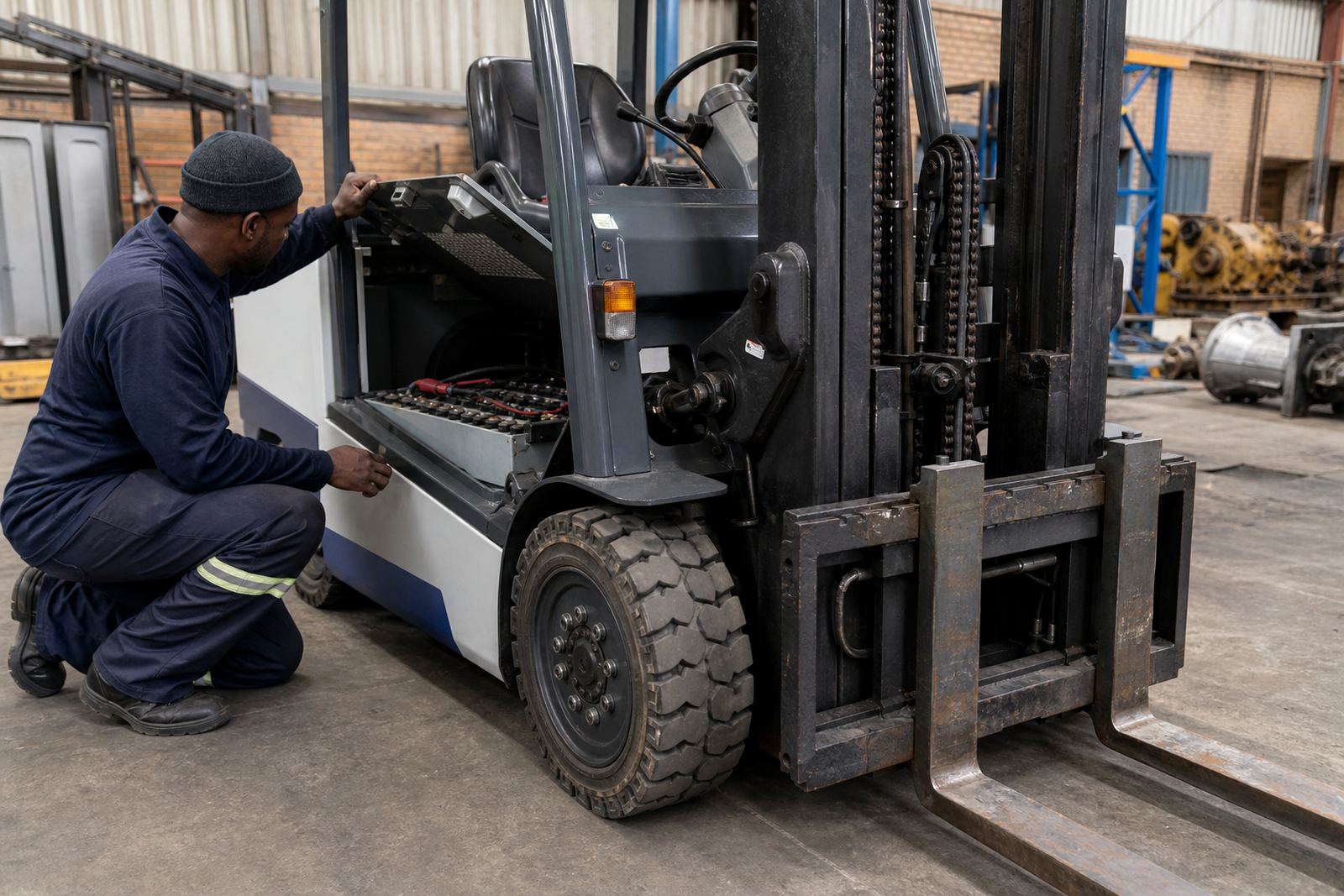
Hydraulic leaks are common warning signs on older industrial equipment. Look under the machine and around hose connections, rams and valves for oil stains, wet patches or fresh drips. If the forklift is electric, inspect battery condition, cable insulation and charger compatibility. If it is diesel or LPG powered, check for smoke, rough idling, fuel smell and signs of poor starting.
In a load-shedding environment, buyers often pay closer attention to electric units because charging habits and battery care matter. A forklift that has stood unused for long periods may need batteries, cables or control components replaced, even if the frame looks tidy. That is why an auction inspection should focus on function, not appearance alone.
- Look for hydraulic oil leaks around hoses, cylinders and fittings
- Check engine starting behaviour and idle quality on powered units
- Inspect battery casings, cables and terminals on electric models
- Confirm whether charging equipment is included and in working order
Read the Controls, Safety Gear and Operator Area
The operator area should be neat enough to support safe use. Check the seat, seat belt, pedals, display panel, warning lights and control levers. Missing guards, cracked mirrors or broken switches can point to deferred maintenance. A worn seat or faded labels might seem minor, but they help show whether the machine has had regular care or long, hard use.
Safety features matter because they affect how the forklift can be put back into service after purchase. In a warehouse or factory setting, a machine may need repairs before it can be used again, and a buyer should factor that into the bidding decision. For businesses buying through auction, the aim is not only to get a machine at market value but to understand what will be required before it can work reliably.
- Test the horn, lights, indicators and warning devices
- Check the seat belt, seat condition and operator switches
- Look for missing covers, broken guards or damaged panels
- Confirm that labels and load ratings are still readable
Use the Site Conditions to Judge True Working Life
A forklift’s condition is tied to the environment it worked in. A machine used in a clean distribution centre in Midrand will usually age differently from one used outdoors on a windy, dusty yard in Germiston or near a port area with salty air. Dust, moisture and uneven ground all affect bearings, wiring, tyres and moving parts.
That is why local context matters when bidding at auction. Buyers should ask how the forklift was used, whether it was stored under cover, and whether the machine has been sitting idle for months. A machine that looks fair from 10 metres away may still need electrical work, seal replacement or a hydraulic overhaul once it is back in the workshop.
For sellers, honest condition notes and a clear photo listing help attract the right bidders. A proper inspection before auction also supports better reserve guidance, because the machine can be presented with its real condition rather than wishful thinking.
A Practical Auction Example From the Gauteng Market
Picture a buyer looking at a used forklift in Kempton Park before bidding. The machine starts, lifts and steers, but the tyres are uneven, the mast has visible play and there is a light hydraulic seep near one hose fitting. None of that automatically rules it out, but each point changes how the buyer should value it and what repairs may be needed after collection.
That is the main point of a good forklift check. A valuation is an opinion of value based on condition, demand and known facts, not a guarantee of the final sale price. An auction process works best when sellers and buyers use the same practical standard: inspect properly, note the defects and bid with the real work ahead in mind.
If you are buying or selling used industrial machinery across Johannesburg, Pretoria, Durban, Cape Town or Gqeberha, a structured inspection helps keep the process honest and efficient. It also gives both sides a clearer picture before viewing day ends and bids begin.