Start with the papers that prove what the machine is
When a machine comes up for sale, the first job is to identify it properly. A clear record of the make, model, serial number, year of manufacture, capacity and power supply helps the valuer match the item to the right class of equipment. If the plate is still readable, take a close photo of it. If it is missing or painted over, note that too. A machine with a partial record can still be assessed, but it takes more time and often needs on-site confirmation.
For auction campaigns in Kempton Park, Johannesburg or Durban, this kind of basic information is especially useful because buyers often compare similar items across several sites. The more accurately the machine is described, the easier it is to place it in the correct lot and write a fair catalogue note.
- Asset register entry, if available
- Data plate photo or rubbing
- Purchase invoice or delivery note
- Model and serial number
- Any notes on attachments or special fittings
Keep service records and repair history together
Service history can tell a stronger story than a sales brochure ever will. Regular maintenance records show whether the machine was looked after, which parts were replaced, and whether major work was done recently. That helps the valuer judge wear and tear, and it also helps a buyer understand what they are looking at. A machine that has run for years in a workshop but still has clean service records may present better than one with no paperwork at all.
It is worth keeping invoices, logbooks and workshop notes together in one file. If the machine had a motor rewind, gearbox rebuild, hydraulic hose replacement or control panel repair, make a note of the date and what was done. Even simple records can help when the machine is photographed for a catalogue or viewed during an inspection. In coastal areas like Gqeberha or Durban, service notes can also show how corrosion was managed over time, which matters more than many sellers realise.
- Service logbook entries
- Invoices for repairs and parts
- Preventive maintenance schedule
- Records of oil changes, bearing work or alignment checks
- Notes on downtime or repeated faults
Operating manuals and technical sheets add useful context
Technical documents do not replace an inspection, but they do help explain what the machine should be capable of. Manuals, wiring diagrams, hydraulic diagrams, parts lists and operating instructions help the valuer and the auction team understand how the equipment is configured. This is useful where a machine has had modifications, missing guards or non-standard controls.
Buyers often ask practical questions before they bid. What voltage does it use? Is it single or three phase? What is the duty cycle? Does it need compressed air, water cooling or a fixed foundation? If those details are in the documents, it reduces confusion and saves time during viewing days. It also helps when a buyer is planning collection from a plant in Midrand or a factory floor in Pretoria, where access, lifting points and power needs must be checked before removal.
- Operating manual
- Electrical or hydraulic diagrams
- Parts list and setup notes
- Capacity ratings and safety instructions
- Any modification records or retrofits
Inspections, condition notes and photos tell the real story
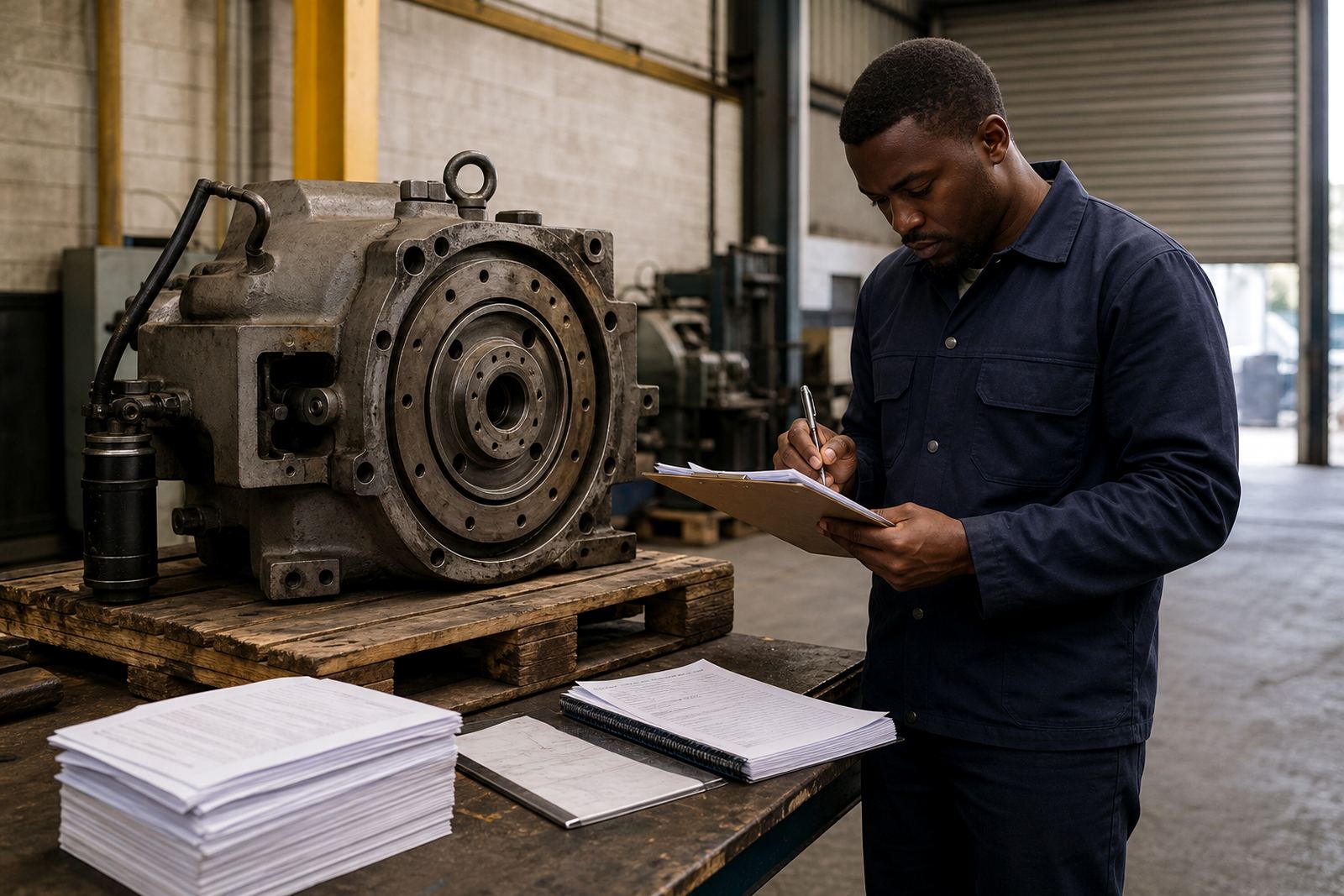
In a sale campaign, condition matters just as much as identity. A recent inspection report, with dated photos, gives a clear picture of the machine before it is moved or cleaned. This helps everyone involved, from the valuer to the auction manager to the buyer who is comparing lots. It is useful to record visible rust, missing guards, cracked hoses, tired bearings, broken displays, leaks, damage to frames and any signs of poor storage.
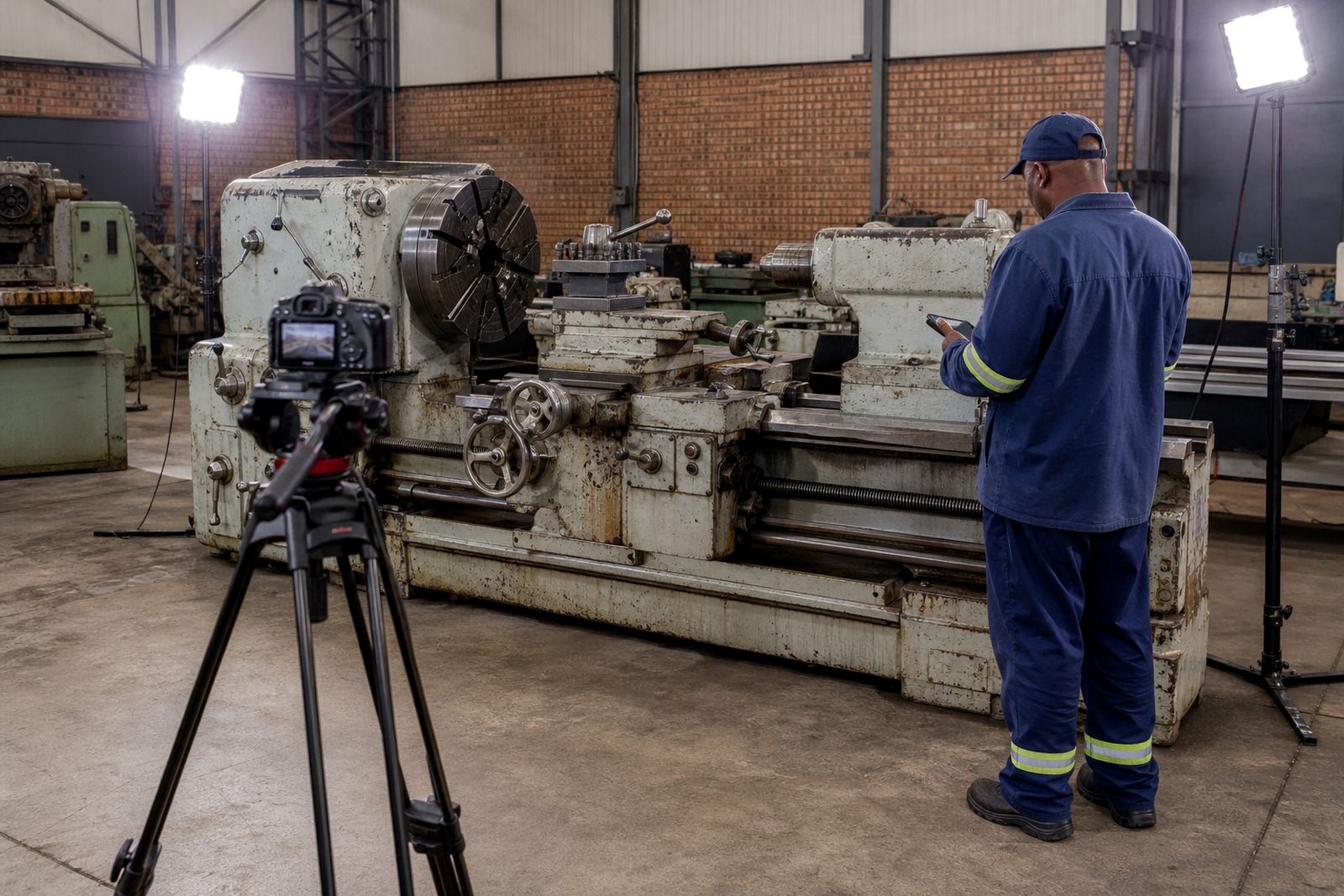
Good photos do not need to be fancy. They need to be honest and complete. Take wide shots, close ups of the data plate, control panel, working area, tyres or tracks if relevant, and any damage. If the machine is stored outdoors in Germiston or on a site affected by load-shedding, photos of the storage conditions can also help explain why certain parts show wear. That is not a negative by itself, it simply gives context.
- Date-stamped inspection notes
- Wide and close-up photographs
- Damage or defect checklist
- Storage conditions and exposure notes
- Any missing components or accessories
Ownership and release papers help avoid delays
Before a machine can be listed for sale, there should be enough proof that it may be offered by the seller. In some cases, that is straightforward. In others, there are leased assets, repossessed items, company closures or shared ownership between group entities. The documents needed will depend on the situation, but the aim is the same: to reduce disputes and keep the process orderly.
It helps to gather paperwork that shows who controls the asset, who may sign for release, and whether there are any restrictions on sale or removal. Where equipment sits on a commercial site, the team may also need access approvals, induction requirements or site-specific removal rules. That matters in places with strict security or loading controls, such as busy industrial areas around Johannesburg and Pretoria.
- Proof of ownership or authority to sell
- Company resolution or sign-off where needed
- Lease or finance release documents, if applicable
- Site access and removal rules
- Keys, remotes, cards and control codes where relevant
How good paperwork supports reserve guidance and lotting
Reserve guidance is best considered with facts in hand. Documents help the valuer judge the machine against similar equipment, but they do not guarantee what it will make on the day. Market demand, condition, location, timing and buyer interest all affect outcomes. A clear file of seller documents simply gives a more honest starting point for advice.
It also makes lotting easier. When the team knows which documents belong to which item, they can group assets sensibly, write cleaner catalogue notes and prepare viewing days more efficiently. If a site in Cape Town has mixed production equipment, spares and support items, the paperwork may help separate what should be sold as a machine lot from what should be sold as loose items. That can save time during clearance and post-sale handover.
A practical file for each lot should include the basics, plus anything that explains the machine’s history. If there are gaps, say so. Missing documents are common, and it is better to note them early than to leave buyers guessing later on. Honest records support trust, and trust matters in auction work.
A simple local example from a Kempton Park site
A manufacturer in Kempton Park may have a compressor, a small lathe and a forklift that has been standing through winter and load-shedding interruptions. If the seller can provide the serial numbers, service notes, a few recent photos and any release paperwork, the valuation can move faster and the catalogue can be prepared with fewer queries. If the forklift has a replaced battery, or the lathe has a non-standard motor, that detail belongs in the file too.
When those records are missing, the team must spend more time checking the machines on site, comparing markings and confirming condition. That is still possible, but it slows the process down. For sellers across South Africa, from Midrand to Gqeberha, the lesson is the same: gather the documents early, keep them together and hand over what you have, even if the file is incomplete.