Start With The Frame, Bed And Ram Alignment
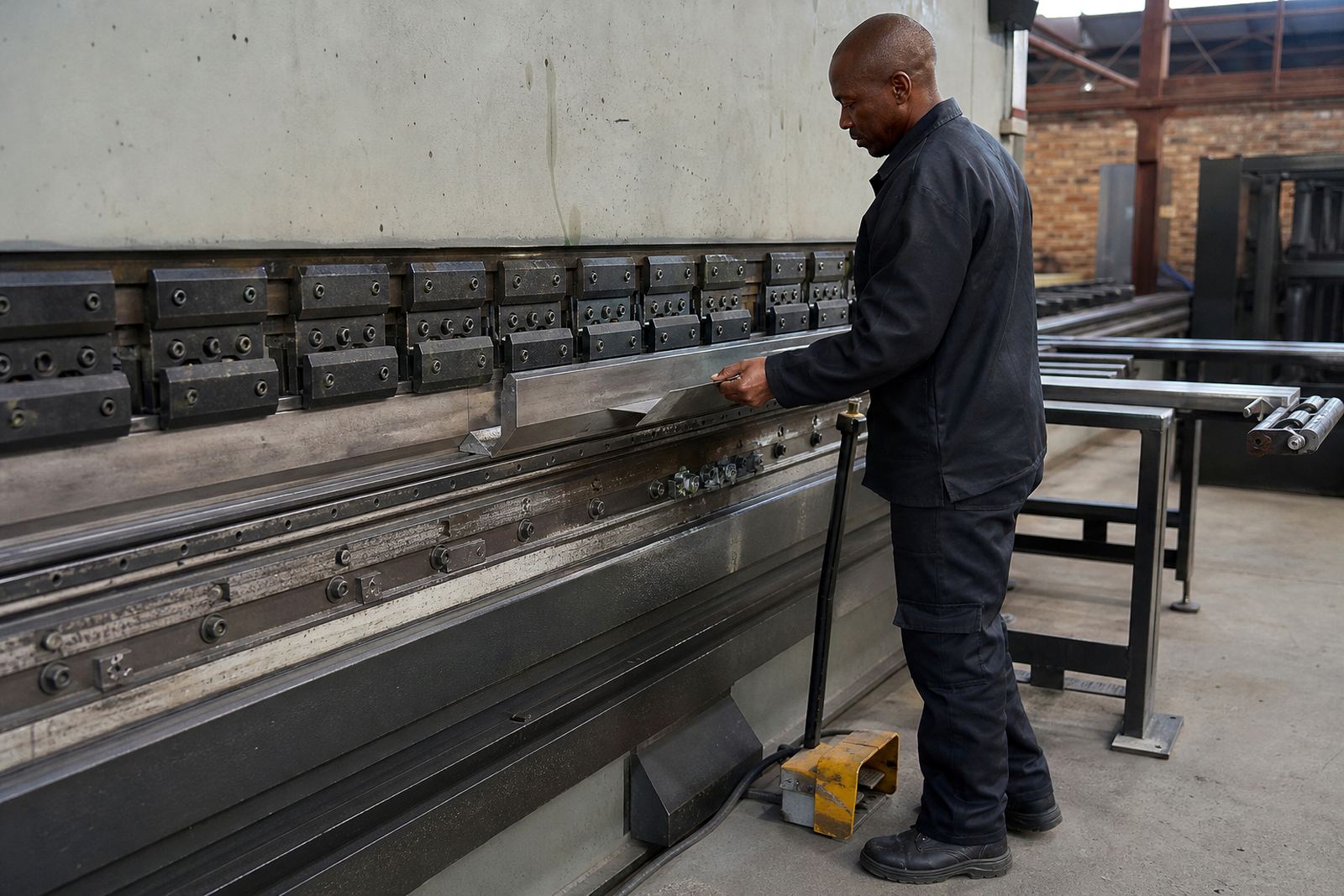
On a press brake, the first question is always whether the frame is true. A machine can look tidy after a wash down, but if the frame has been twisted by overloads, poor handling or years of hard work, the bend line will never stay consistent. Buyers should look for signs of stress around the uprights, cracks near welds and uneven wear where the ram meets the tooling area.
Bed condition matters just as much. Straightness, wear marks and any obvious high spots should be checked against the length of the machine. The ram should travel smoothly and return evenly. If one side drops faster than the other or the stroke feels rough, that points to wear in the guides, hydraulics or both. On site, a valuer will usually compare what is visible with what the machine should do in normal use, then note any items that need further inspection.
- Check for frame distortion, cracked welds and signs of past impact.
- Look for uneven bed wear along the full working length.
- Test whether the ram rises and falls evenly from side to side.
Working Length, Tonnage And Material Thickness Need To Match The Job
Specifications only help if they suit the work you actually need to do. A press brake with enough tonnage but too short a bending length may still be the wrong buy for long components. In the same way, a machine rated for light plate can struggle if your shop handles heavier material or wide returns.
Buyers in Johannesburg, Durban or Cape Town often ask about the biggest sheet they can form, but the better question is what material thickness, bend length and bend type the machine can handle repeatedly. That should be judged with some margin, not right on the limit. If a shop plans to work mild steel, stainless or aluminium, the tooling and force requirements can change quite a bit. Always compare the machine plate data with the type of work on the floor, not just the number on the spec sheet.
- Confirm the working length against the longest part you need to bend.
- Match tonnage to material thickness and fold style.
- Allow headroom for repeat work, not only one-off jobs.
Hydraulics, Controls And Power Supply Tell You How Hard The Machine Will Be To Run
A used press brake may have strong steel work yet still cost too much to keep running if the hydraulics are tired. Oil leaks around cylinders, hoses and fittings are a warning sign. Listen for unusual pump noise, check whether the machine holds pressure properly and see if the ram settles when left in position. These are practical signs, not theory.
The control system also matters. Some buyers only need basic backgauge movement and simple repeat bends, while others need more accurate programmable positioning. If the screen is faded, buttons are missing or the controls are patchy, replacement and fault-finding can take time. In Gauteng especially, shops often ask whether a machine is friendly to local power conditions and site setup. A brake that needs stable supply and careful restart procedures may still be fine, but only if your workshop can support it during load-shedding or after a power interruption.
Electrical compatibility should be checked before transport. It is no use buying a machine that looks like a bargain and then discovering the workshop wiring, protection or phase arrangement needs extra work, because that can hold up commissioning for days.
Tooling, Backgauge And Changeover Time Affect Real Workshop Output
The press brake itself is only part of the story. Tooling condition can make a used machine immediately useful or awkward from day one. Look closely at punches, dies and clamping surfaces for mushrooming, chips, bending or heavy scoring. Even when tooling is not included, the machine should still be assessed for standard fitment and ease of sourcing replacements.
The backgauge is another area buyers should never overlook. It must move accurately, hold position and repeat cleanly. If the stops are loose or the drive is uneven, the operator will spend more time adjusting than bending. That becomes a real issue in a busy shop where small batches and repeat work are common. Changeover time matters too, especially where different jobs run through the same shift. A machine with sensible access, clear controls and tidy tooling storage is usually quicker to put into daily use.
- Inspect tooling for wear, chipping and uneven contact surfaces.
- Check the backgauge for repeatable movement and solid lock-up.
- Consider how fast the machine can be set up between jobs.
What An On-Site Valuation Usually Looks At Before Auction
A proper valuation is an opinion of value based on condition, specification, age, market demand and visible completeness. It is not a promise of sale price. For used press brakes, that means the valuer normally checks the frame, hydraulics, controls, tooling, serial details if available, and any accessories that add usefulness. The machine is then considered against current market demand for that type of equipment, in that condition, at that point in time.
For sellers, the point of a valuation is to understand where the machine sits before it is offered. For buyers, the same process helps explain why two similar-looking brakes can land in very different places at auction. In Kempton Park and other industrial areas around Gauteng, we often see machines that have been moved between factories and left standing for years. A clean machine is not always the best machine, and a dusty one is not always the worst. The details matter.
Where an auction is used, lotting and cataloguing should make the machine clear to bidders. Good photos, honest notes on defects and a practical viewing day give buyers a fair basis to decide. That approach helps reduce confusion and keeps the process transparent for both sides.
Local Example: A Workshop In Germiston Needed A Brake For Short-Run Jobs
A small fabrication workshop near Germiston needed a used press brake for short-run parts and repair work. The main concerns were bend accuracy, backgauge movement and whether the machine could handle regular daily use without constant attention. On inspection, the frame was sound, but the hydraulics showed minor seepage and the tooling had visible wear. The control system was basic yet serviceable, which suited the shop because their work was repeatable rather than highly complex.
That kind of example is common across Johannesburg, Pretoria and Midrand. Buyers often want a machine that is affordable, ready to go and not overcomplicated. Sellers usually want a fair market opinion and a sensible route to market through an auction or direct disposal plan. With a press brake, the best outcome usually comes from matching the machine to the job rather than chasing the biggest specification on paper.
For buyers in coastal cities like Durban, humidity can also affect stored machinery. Surface rust, cabinet corrosion and old electrical damage should be checked carefully if the machine has stood near the sea or in an open yard. Those signs do not always rule a machine out, but they do affect the level of work needed before it goes into production.
- Match the machine to the actual job mix in your workshop.
- Ask how long it has been standing and where it was stored.
- Budget for recommissioning if the machine has been idle for some time.