What Buyers Notice First in a Used Lathe
When a lathe comes up for sale, buyers usually start with the basics: swing over bed, distance between centres, spindle bore, motor size and whether the machine still runs true. A small toolroom lathe and a heavier production lathe can both be useful, but they attract different buyers because they solve different problems in the workshop.
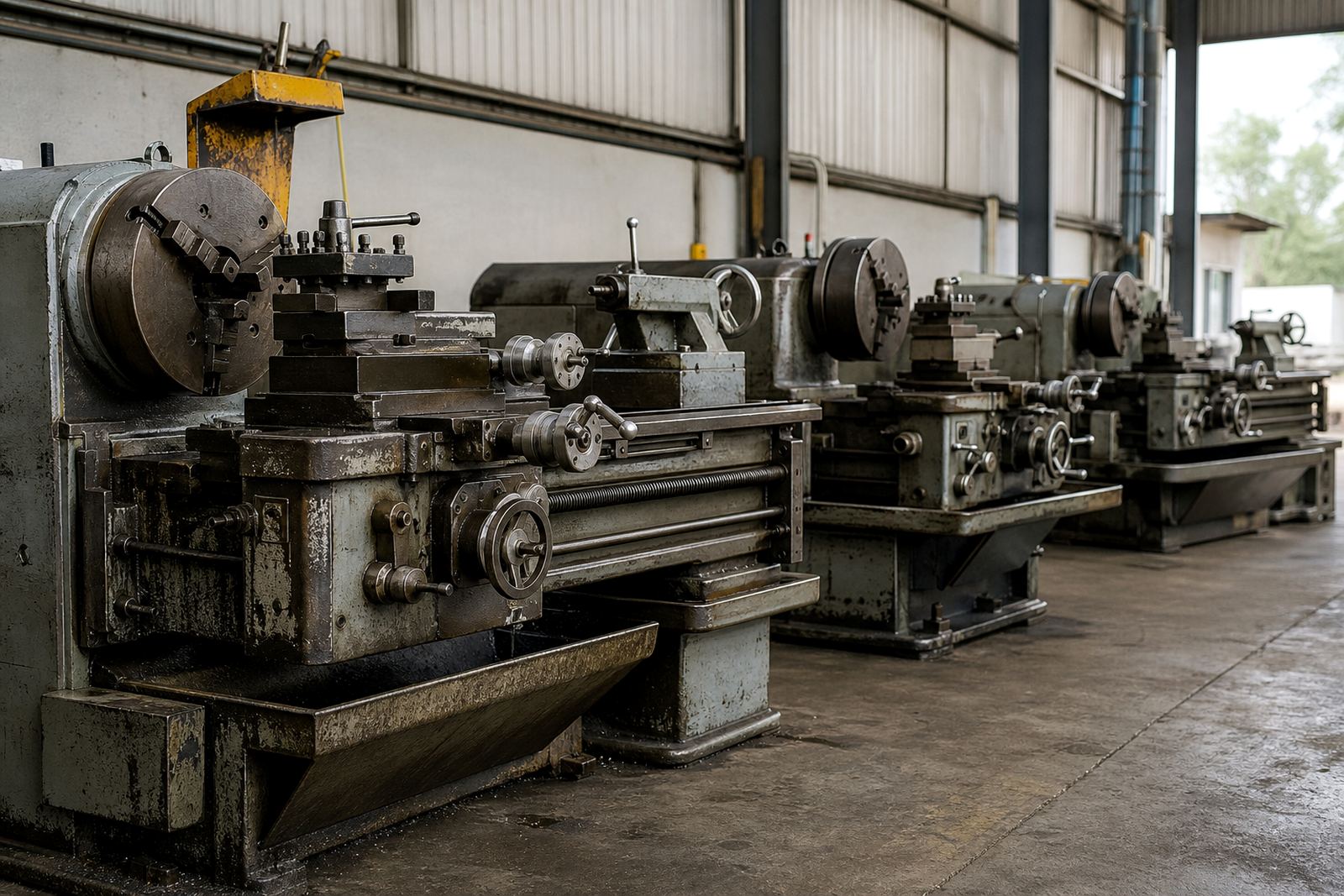
In South Africa, interest often rises when a machine is still complete and ready to inspect. A lathe with its chucks, faceplate, steady rest, coolant system and tool post tends to draw more attention than a bare machine that needs parts hunted down later. Buyers also check if the controls are legible, if the feed mechanisms work, and whether the machine was kept indoors or left in a damp corner of the plant.
Condition, Wear and the Details That Change Value
An opinion of value for a used lathe is based on evidence, not guesswork. A valuer will look at bed wear, backlash in the carriage, headstock noise, tailstock alignment, chuck condition, leadscrew wear and the general state of electrics. Even paint condition matters a little, because it can hint at how the machine was treated over time.
Age alone does not settle the matter. Some older machines still hold value because they were maintained properly and have seen light duty. Others look tidy but have hidden issues such as worn bearings, poor rewiring or damaged gears. For buyers, the real question is how much work is needed before the machine can earn its keep in a busy shop.
- Check for smooth spindle rotation and any unusual rumble.
- Inspect the bed for scoring, taper wear and chips under the carriage.
- Look at the electrical box, isolator and emergency stop setup.
- Confirm the machine is complete with guards, change gears and key accessories.
- Ask whether it was used for general turning, repairs or heavier repetitive work.
How Auction Interest Builds Around a Lathe Lot
At auction, a lathe seldom stands on its own. Interest depends on how it is presented in the catalogue, whether it is grouped with related machines, and how clearly the details have been described. Buyers want accurate measurements, clear photos and honest notes on condition. If a machine is a metric model, has a large swing, or includes tooling and cabinets, that can widen the pool of bidders.
The lotting approach also matters. A single well known machine may do well as a separate lot, while smaller items such as tools, vices, collets and spare jaws might work better as grouped lots. Good viewing days help because buyers can test movement, inspect the base, and see whether the machine is still properly level on the floor. That matters in workshops from Germiston to Midrand where buyers want to avoid costly surprises after collection.
- Clear catalogue notes reduce doubt and improve attendance at viewing.
- Good lighting and clean presentation make defects easier to assess.
- Grouped tooling can lift interest for smaller workshop buyers.
- Reserve guidance should stay realistic so the sale has a fair chance of moving.
Why Gauteng and Coastal Workshops Price Lathes Differently
Location plays a part in the used lathe market. In Gauteng, many buyers are looking for quick replacement options for repair shops, fabrication yards and maintenance teams. Machines close to Johannesburg, Pretoria or Kempton Park can be easier to inspect and collect, which often increases interest. In coastal areas such as Durban, Cape Town and Gqeberha, buyers may pay closer attention to corrosion, electrical condition and storage history because humidity and salt air can leave marks on exposed steel and components.
A practical example is a mid-sized lathe removed from a Kempton Park plant. If it has been indoors, powered regularly and kept with its tooling, it may attract local buyers first because they can inspect it quickly and plan collection without long travel. The same machine, if stored poorly or exposed to moisture, will usually need more careful valuation because the likely rework costs affect what buyers are willing to consider.
What Sellers Should Prepare Before an Inspection
Before a valuation or auction listing, sellers can help by making the machine accessible and easy to test. Clear floor space around the lathe, remove loose scrap, and have any manuals or service notes ready. If the machine is still wired, make sure a competent person can isolate it safely for inspection. In many plants, especially where load-shedding has interrupted normal routines, it helps to confirm that the machine can be checked when power is available and safely brought to a stop.
Simple preparation can save time and improve the quality of the valuation. It also helps with seller representation because the valuer can see the machine as a buyer would, not hidden behind clutter or missing parts. If the lathe is part of a larger plant closure, it may be worth planning the collection sequence early so transport, lifting gear and site access are sorted before the sale date.
- Have the model details and serial number available if visible.
- Keep tooling, chucks and loose accessories together in one place.
- Note any known faults, missing parts or recent repairs.
- Make sure access routes can take a forklift, crane truck or rigging crew if needed.
Buying for Use, Not Just for the Listing
Many workshop owners lose money when they buy a lathe that looks good but does not suit the job. A machine may be attractive on paper, yet too small for shaft work, too heavy for the floor loading, or too old for the output needed. Buyers should think about the actual work cycle, the available power supply, and whether the lathe fits the shop layout. That is especially important where municipal rules, industrial park access or noise limits affect how equipment can be installed and used.
For a buyer, the safest approach is to compare the machine against the work list. If the lathe is for short repair jobs, a compact and accurate machine may be the better choice. If it is for longer runs, bed length, rigidity and spindle condition matter more. On an auction floor, the winning bid is only part of the decision. Collection, transport, offloading and recommissioning all need to be considered before the hand goes up.
Why Clear Valuations Help Both Sides
A proper valuation gives sellers an informed view of likely market interest and gives buyers a fair point of reference. It is an opinion of value based on condition, market demand and the machine's specifics, not a guarantee of sale price. That is why accurate inspection and honest catalogue descriptions matter so much in the used lathe market.
At Machine Africa, our focus is on practical assessment, lotting, catalogue preparation and auction planning for used industrial machinery across South Africa. From Kempton Park to Johannesburg, Pretoria, Durban, Cape Town and Gqeberha, the same principle applies: the better the information, the better the decisions on both sides of the sale. When the details are right, workshops can buy what they need and sellers can move equipment with confidence.