
Why loose items should stay tied to the machine they belong to
When a machine is sold with its chucks, dies, guards, tool holders, change gears or instruction books, those items are part of the working picture. Buyers are not just looking at steel and motors, they are trying to understand whether the machine can go into service quickly, what parts are missing and what extra spend may be needed after collection.
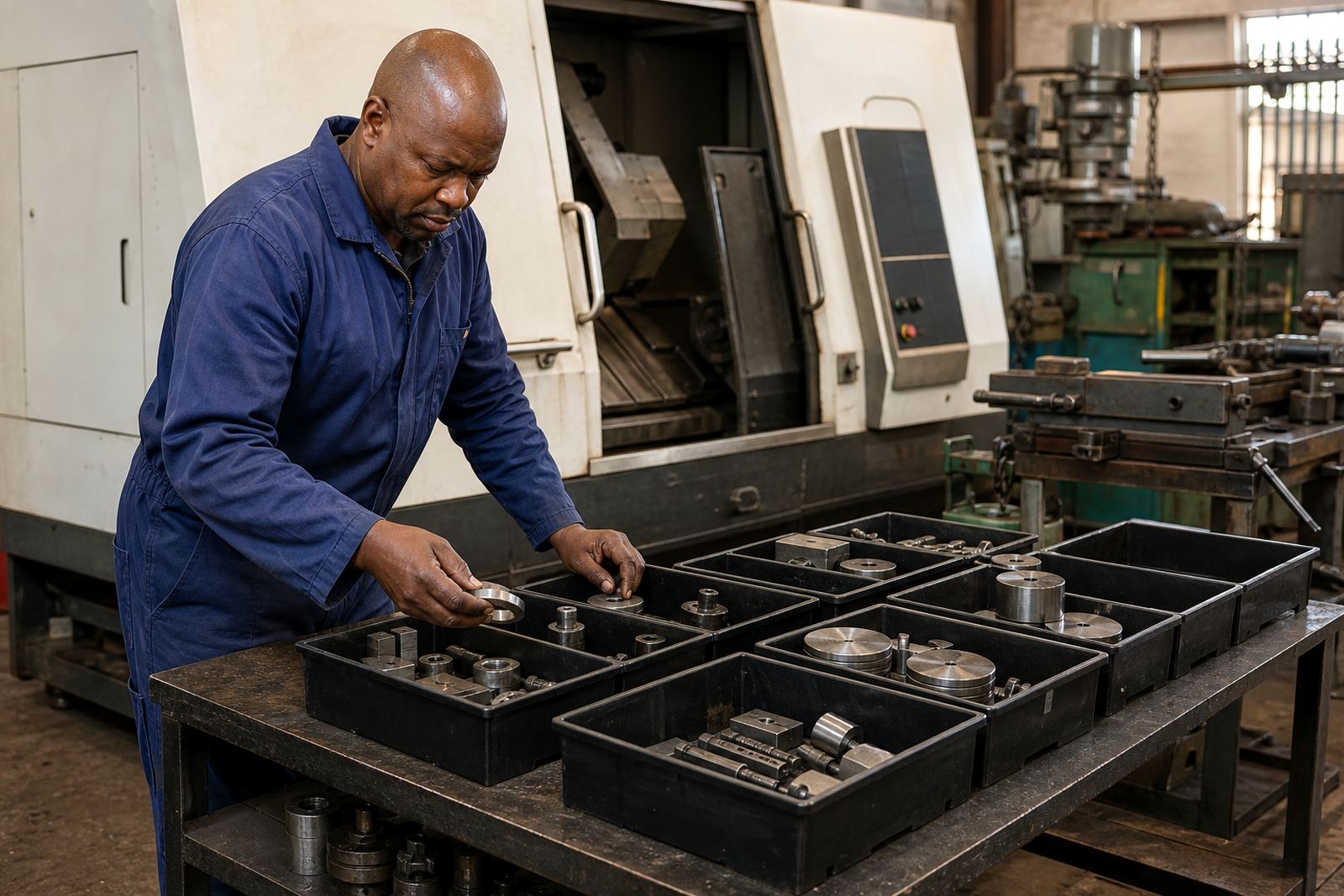
At auction, that is why spares and tooling should be matched to the correct lot from the start. A lathe with the wrong collets, or a press brake with tooling that does not fit the bed, can create problems that were easy to avoid. The same applies to manuals, wiring diagrams and maintenance records. They may seem small, but they help the buyer test, move and run the equipment with fewer surprises.
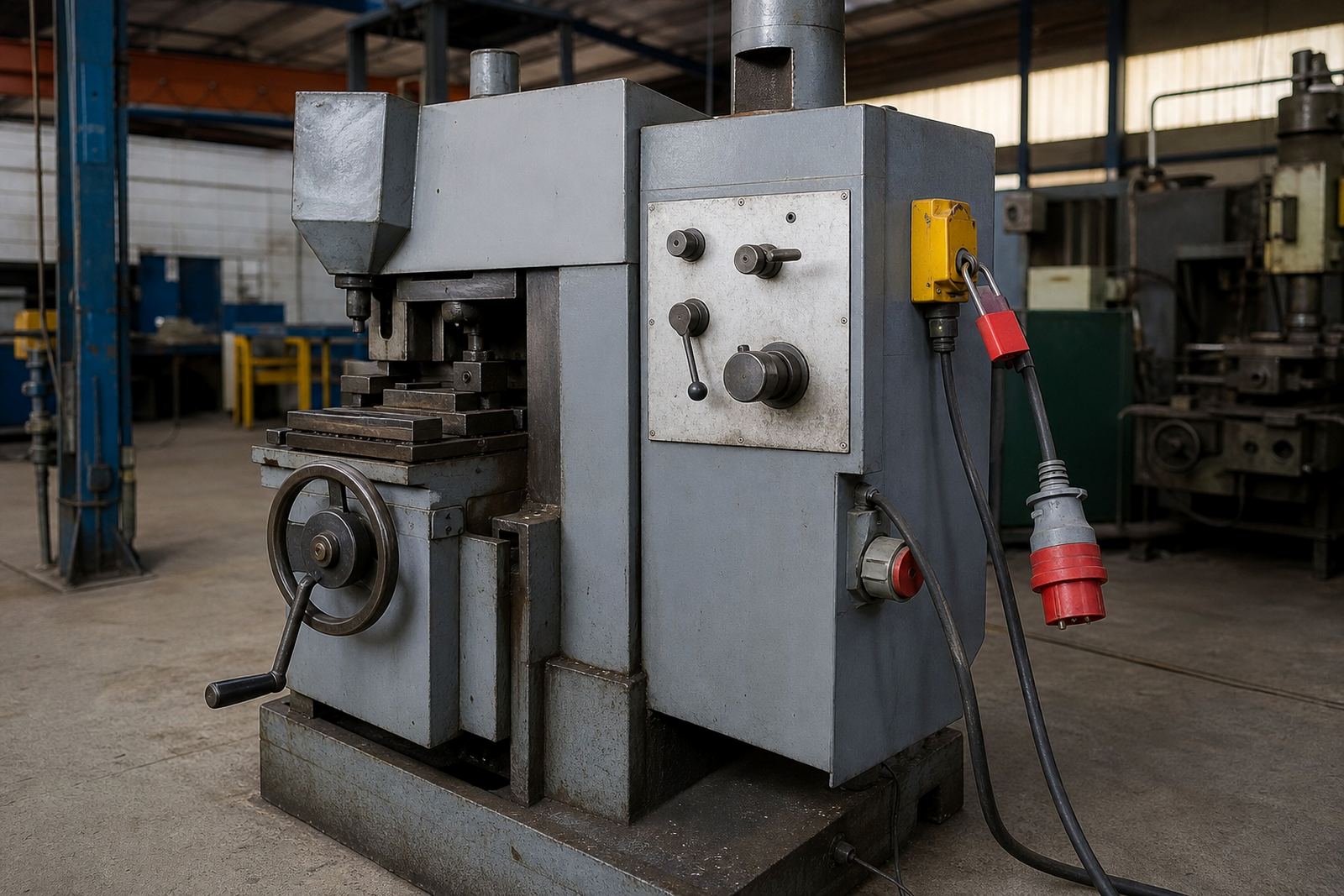
For sellers in Kempton Park, Germiston or Midrand, this matters even more where yards often hold mixed stock, old projects and machines waiting for clearance. If a loose item sits on a shelf without a label, it can be mistaken for scrap or added to the wrong lot. Once that happens, the record gets messy and the value can be undermined.
How a proper lotting process treats tooling, spares and books
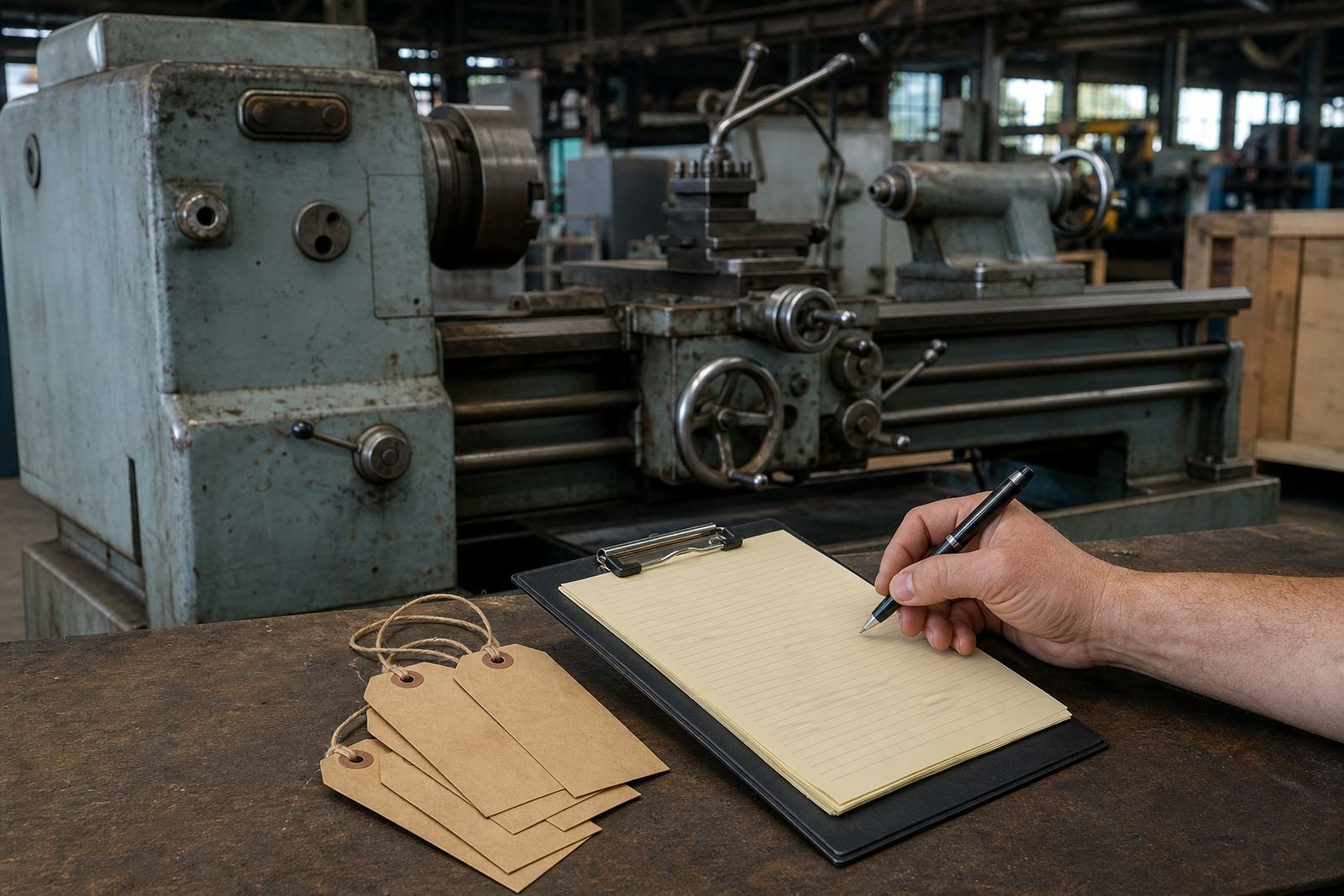
A good lotting process starts with inspection. Each machine is checked for attached items, then loose items are identified, counted and linked to the right asset record. Where practical, the valuer notes whether the item is fitted, boxed or stored separately. Photographs help too, especially when there are several similar pieces on one site.
Clear descriptions reduce later argument. Instead of writing only “spares included”, the catalogue should say what the spares are, whether they are used or new old stock, and whether they are visible on site at the time of inspection. If a manual set is incomplete, that should be noted as well. Transparency is not about making a lot look bigger. It is about giving buyers a fair view of what they are bidding on.
- Tag tooling to the exact machine serial number where possible
- List manuals, drawings and keys separately if they are not fixed to the unit
- Photograph loose items beside the machine before any move starts
- Mark consumables and wear parts clearly so nobody confuses them with core spares
- Record missing parts before viewing day, not after the hammer falls
What buyers need to check before they bid
Buyers often focus on the main machine and only later ask about the small items. That is understandable, but it can lead to missed detail. A press, saw, milling machine or compressor may be fully present, yet still need one critical part before it can work properly. In South Africa, where transport from Johannesburg to Durban or Cape Town can already be costly, buyers should know exactly what is included before they send a truck.
During viewing days, ask whether the tooling shown in the photos is included in the lot, and whether any parts seen in the background are only there for storage. It is also wise to check whether manuals are originals or copies, whether electrical drawings are legible, and whether special jigs or fixtures have been matched to the correct machine. If there is any doubt, it is better to ask before bidding rather than after collection.
Buyers should also remember that a valuation is an opinion of value, not a guarantee of the eventual sale price. The condition of the machine, the presence of spares and the quality of the description all influence interest on the day. A complete, well matched lot usually gives a clearer buying decision than a mixed pile of parts with no record.
A local example from a Kempton Park clearance
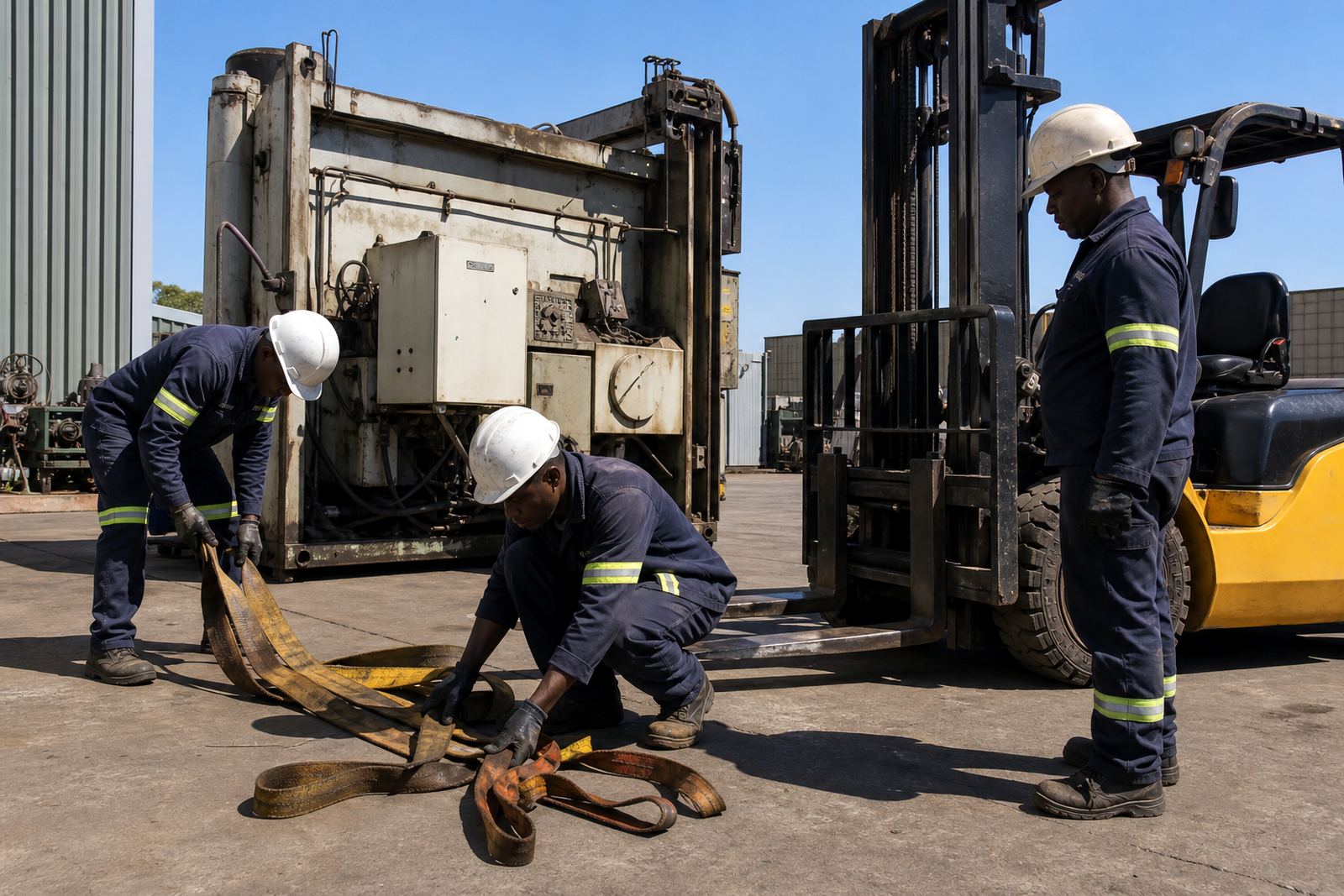
In a Kempton Park industrial yard, a seller may have a metalworking machine standing in one bay, with a cabinet of inserts, a box of clamps and a folder of service notes stored several metres away. On paper, it all belongs together. In practice, if those items are not sorted early, the team could lot the machine without its supporting items and the buyer only discovers the issue after collection. That creates avoidable calls, delay and frustration.
Handled properly, the process is straightforward. The valuer records the machine, the operations team checks the loose items, and the catalogue coordinator links the photos and notes to the correct lot. If the manuals are dusty or the spares are mixed with general workshop stock, they still get identified and described. This is especially useful when a site has been running through load-shedding periods or under pressure to clear floor space before a lease handover.
For sellers in areas such as Johannesburg, Pretoria, Durban, Cape Town and Gqeberha, the lesson is the same. The value of support items depends on clear matching, not guesswork. A machine with the right accessories can be easier to sell, easier to inspect and easier to remove from site.
What should be included, and what should be separated
Not every loose item belongs in the machine lot. Some parts are truly part of the asset, while others are general workshop stock. The key is to separate what helps the buyer operate the machine from what is just nearby. A cabinet of random fasteners, old offcuts or mixed consumables may need its own listing, or may not be saleable with the machine at all.
Good auction planning treats the following with care:
- Fixed tooling that forms part of normal operation
- Special spares needed for set-up or maintenance
- Control manuals, safety notes and wiring diagrams
- Keys, remotes, gauge sets and calibration accessories
- Unopened consumables that are clearly labelled and suitable for the machine
Items that are not tied to the machine should be handled separately. That keeps the sale fair and helps avoid arguments over what was meant to be included. It also helps when several departments have used the same workshop over time, which is common in larger plants around Gauteng and the coastal metros.
How Machine Africa helps keep the record straight
At Machine Africa, the team approaches spares with the same care as the main equipment. On-site valuations, plant appraisals and inspections are used to identify what belongs to the asset, what needs clarification and what should be separated into another lot. The auction manager, senior valuer and catalogue team work together so that the listing reflects the site as it stands, not as someone remembers it from months ago.
That process helps sellers reduce confusion and gives buyers a cleaner view of the lot. It also supports viewing days, reserve guidance, seller representation and closure support when machines are removed after sale. For industrial businesses across South Africa, from Germiston and Midrand to Durban, Cape Town and Gqeberha, the practical benefit is simple: fewer disputes, better records and a smoother handover.
If you are preparing machinery for auction or valuation, gather the spares, books and tooling before the inspection. Even a small box of change parts can affect how the lot is understood and how bidders respond. The right match saves time for everyone, and it helps the machine speak for itself.