Start With The Set, Not Just The Engine
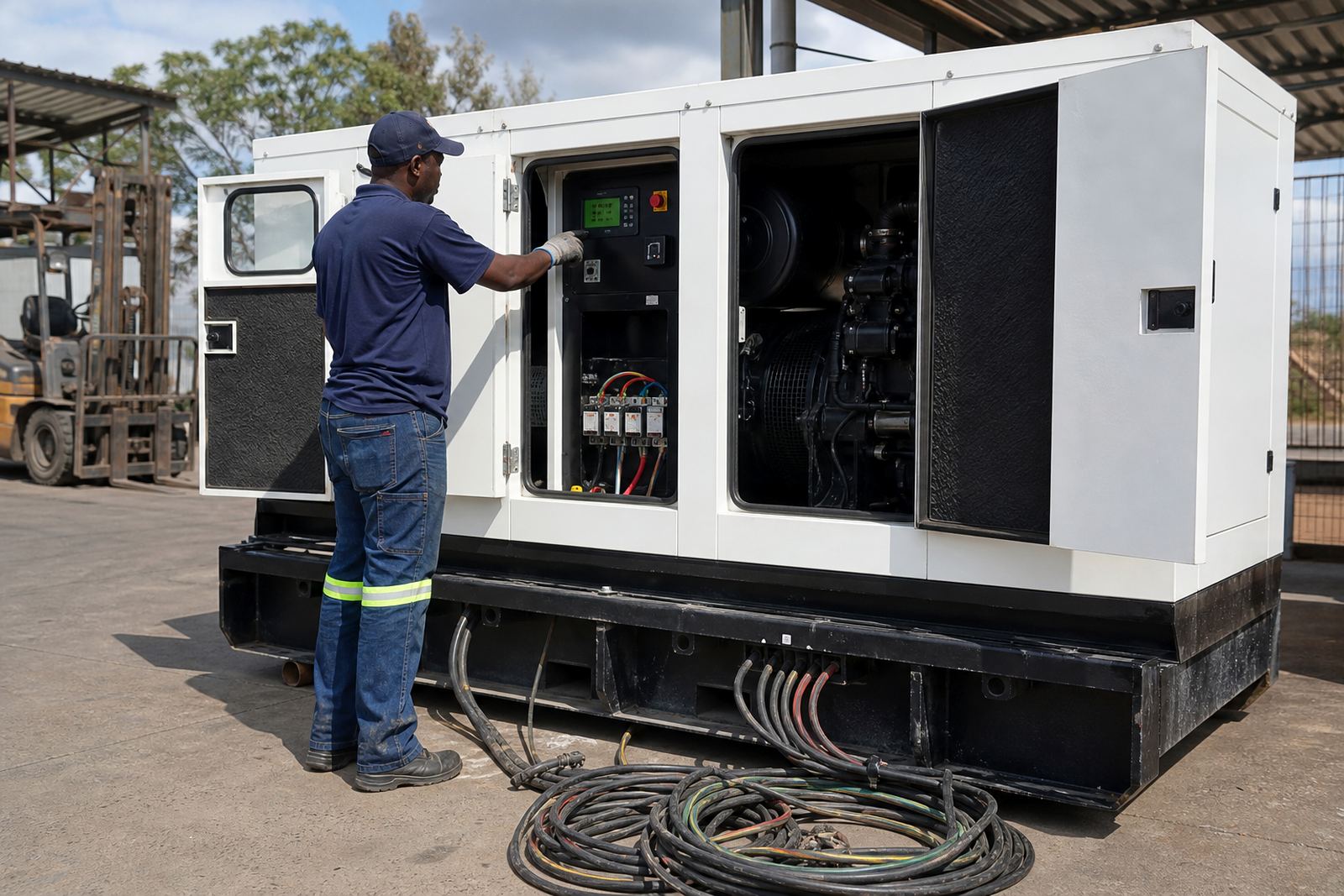
When a generator is assessed for sale, the first step is to look at the full set. Buyers do not only want to know the kVA rating, they want to know whether the alternator, control panel, base tank, breaker, canopy, batteries and changeover support are all present and working. A machine that starts and runs may still need parts, cabling or a service before it can be put to work again, so those details matter in the valuation.
For industrial buyers in Johannesburg, Pretoria or Durban, the real question is often whether the set can be installed quickly with limited interruption. That is why a valuer checks practical points such as visible leaks, smoke on start-up, signs of overheating, rust on the frame and the condition of hoses and belts. A neat, complete unit usually attracts more interest than a mixed or incomplete one, even when the engine hours are similar.
- Confirm the rated output and frequency
- Check whether the canopy or open skid is complete
- Note batteries, starter components and control gear
- Look for missing panels, covers or mounting parts
Hours, Service Records And Load Test Evidence
Running hours are useful, but they never tell the whole story on their own. A set with moderate hours and a proper service trail can be more attractive than a lower-hour unit with no records at all. Service history helps show how the generator was used, whether it stood idle for long periods, and whether oils, filters and coolant were changed on time. For a buyer, that kind of detail reduces uncertainty.
Load test evidence is also important. A generator may start easily yet struggle under actual demand, especially after long storage in a coastal area where humidity can affect electrical components. In places like Gqeberha or Durban, a careful inspection should include corrosion checks, water ingress signs and the condition of terminals. A valuation remains an opinion of value, not a guarantee of sale price, but clear records can support that opinion and make the lot easier to market.
- Request service invoices or maintenance logs where available
- Record the hour metre reading at inspection
- Ask whether the set has been load tested recently
- Check for long periods of inactivity or storage damage
Support Gear Can Lift Or Limit The Value
Generator buyers often pay close attention to the extras around the set. A generator with a good fuel tank, sound exhaust system, control cabinet, synchronising equipment or matching switchgear can be far more usable than a bare unit. The same applies to transport fittings, trailers where relevant, and any bunded or spill-containment items that help the installation meet site rules. If the support gear is missing or damaged, the buyer must price in replacement costs.
In Gauteng industrial areas, sites are often judged on access, lifting points and how quickly a unit can be removed without disturbing operations. A generator in a tight plant room in Germiston may need different planning from one standing in an open yard in Kempton Park. During valuation, those practical points matter because they influence the likely buyer pool and the ease of collection after sale. The more complete the set, the easier the sale process tends to be.
- Include fuel tanks, exhausts and base frames in the inspection
- Identify any switchgear, cables or control links supplied with the unit
- Note whether the set is skid mounted, containerised or open frame
- Check if lifting access is safe for removal crews
Why Location And Site Conditions Affect The Auction Plan
Where a generator is located can change how it is prepared for auction. A set in Midrand with straightforward road access may be easier to view and collect than a unit in a cramped factory yard with limited turning space. Site conditions also affect presentation. Dust, oil staining, poor lighting and blocked access can make even a decent machine look neglected, which may weaken viewing day interest.
For sellers, it helps to think ahead about clearance, safety and municipal compliance. If the unit still has fuel onboard, if there are fire risks nearby, or if it sits within a plant where access is controlled, those points must be managed before viewings. In some cases, it may be better to arrange an on-site valuation first, then decide whether the lot should be sold where it stands or moved to a central point. The right plan depends on the type of machine, the site rules and the likely cost of preparing it for buyers.
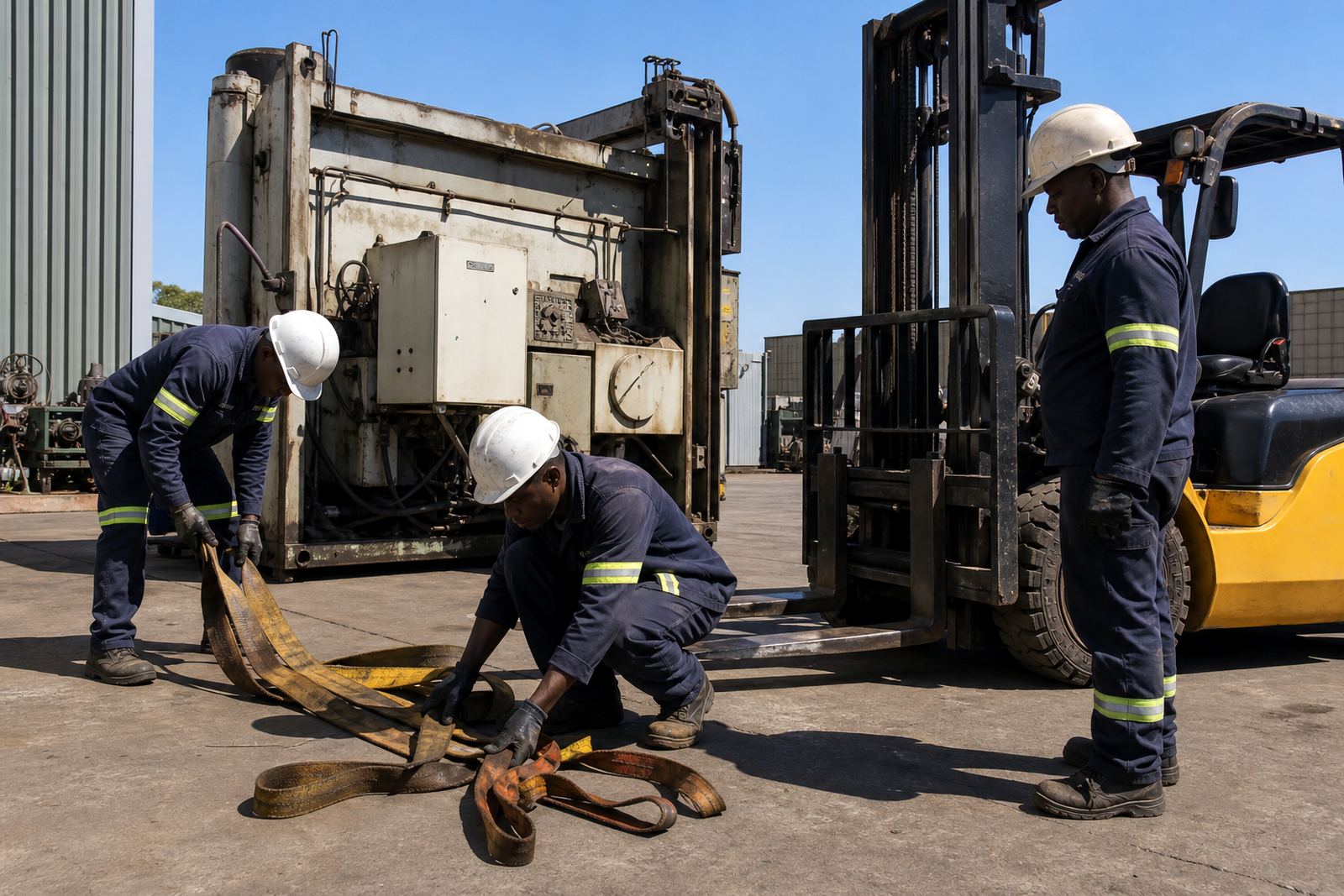
- Assess access for trucks, forklifts and lifting equipment
- Clear the area around the set before photography and viewings
- Confirm fuel, safety and access rules on the site
- Decide early whether removal is practical or if on-site sale is better
What Buyers Usually Want To Know Before They Bid
Buyers generally want direct answers, not marketing language. They want to know if the generator starts, what size it is, whether it has been load tested, whether it has any fault warnings, and what is included with the lot. They also want to know if there are visible defects that could affect installation or future servicing. Straight answers help build trust and keep the auction process efficient.
Good cataloguing supports that process. Clear photographs of the serial plate, control panel, alternator side, engine bay and overall condition are worth more than a handful of close-up shots with no context. If a unit has been modified, repaired or partially stripped, those facts should be noted plainly. That way buyers from Pretoria, Cape Town or elsewhere in South Africa can judge whether the set fits their site and budget before they attend the viewing day or place a bid.
- Show the nameplate and all visible identification marks
- List any missing parts or known faults
- Explain what is included with the sale lot
- Use photos that show the whole set, not only details
A Kempton Park Example Of A Practical Valuation
Consider a generator set standing at a Kempton Park warehouse after a site upgrade. The owner wants a fair view of what the set may achieve through auction, but the machine has been idle for months and the fuel system has not been checked recently. In that case, the inspection would look at the hour reading, physical condition, service trail, batteries, controls, and whether any support gear is still on site. If the canopy has surface rust and the exhaust insulation is worn, those points must be recorded because they affect buyer confidence.
The practical lesson is simple. A generator that is presentable, complete and properly documented is easier to market than one with unknown history. The same set can also be viewed differently by buyers depending on whether they need a backup unit, a standby set for a workshop, or a piece of equipment for refurbishment. That is why an opinion of value must reflect the condition in front of the valuer, not an assumed outcome. With generator lots, facts matter more than promises.
For sellers across South Africa, from Johannesburg and Pretoria to Durban, Cape Town and Gqeberha, the strongest result usually starts with accurate information, sensible lotting and honest presentation. A well handled auction plan gives buyers confidence and gives the seller a clear path from inspection to viewing days, then closure support after the sale.
How Machine Africa Approaches Generator Lots
Our work starts with an on-site valuation and asset inspection, then moves into auction planning, lotting and cataloguing where required. We look at the machine as a working asset, not just a shell of metal and wiring. That means checking the set, the support gear and the access conditions before any sale strategy is set. Where needed, reserve guidance and seller representation can help the owner decide how the lot should be presented.
For industrial generators, accuracy saves time. It keeps the catalogue clear, helps viewing days run properly, and gives buyers the information they need before they make a decision. Whether the unit is in Germiston, Midrand or further afield, the same principle applies: know what is there, state what is missing, and let the market respond to a clear and orderly lot.