
Start With a Site Brief Before Anyone Steps In
Before a valuer, buyer or collection crew enters a plant, the person in charge should brief everyone on the site rules. That includes where to sign in, which paths are safe to walk, which areas are out of bounds and who must be informed before any machine is started or moved. Good shop floor safety begins long before the first inspection photo is taken.
A proper brief also covers practical matters that are easy to miss on a busy day. Check whether the site has live electrical panels, forklift traffic, slippery floors, overhead cranes, compressed air lines or restricted access around production lines. In many yards and factories, one missed instruction can create a delay or an avoidable incident.
- Confirm the contact person for the day and the backup contact.
- Ask about lockout procedures for powered equipment.
- Find out where visitors may walk and where they may not.
- Check whether PPE is needed, such as safety boots, hard hats, gloves or eye protection.
Keep Viewings Controlled and Unhurried
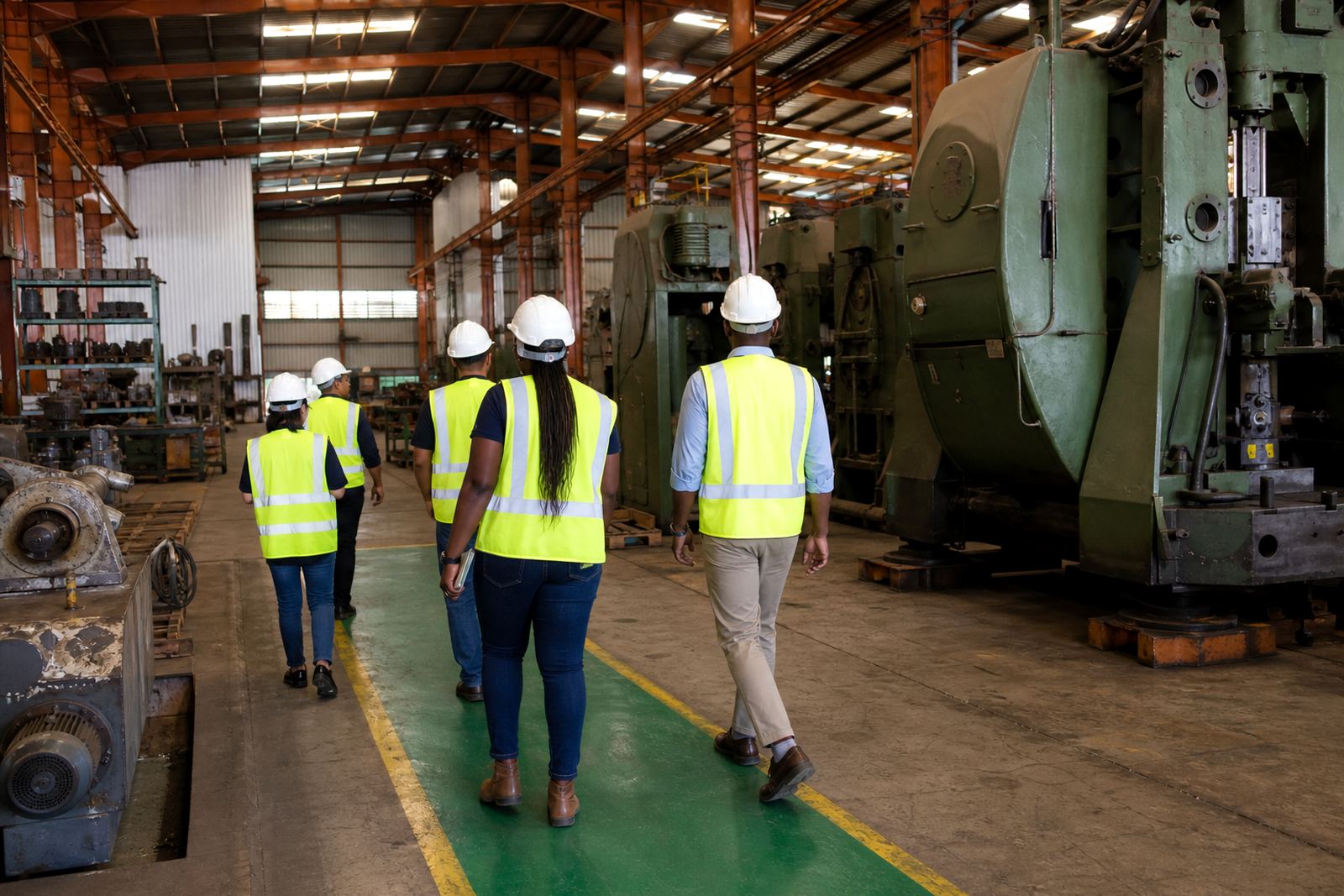
During a viewing day, the biggest risk is often crowding. Buyers want a close look at the machine, but too many people around moving parts or uneven floors can create problems. It helps to keep groups small, set a viewing path and make sure someone from the site or auction team is always leading the walk-through.
Machines should stay isolated where possible, especially if there is still power connected. Guards should remain in place and nobody should climb onto equipment unless the site manager has allowed it. A clean viewing route matters too. Loose cables, oil patches and packaging offcuts are common trip hazards, particularly in older workshops and depots where housekeeping can slip during peak periods.
- Limit the number of visitors around a machine at one time.
- Use marked routes to avoid forklifts and operating plant.
- Do not allow visitors to touch controls, switches or panels.
- Keep children and unauthorised people away from viewing areas.
In Kempton Park, for example, a mid-morning viewing at a light engineering yard can run smoothly if the floor is swept, pallets are stacked clear and the supervisor keeps production staff informed. Without that planning, people end up walking through active work zones and everybody slows down.
Make Asset Inspections Safe and Accurate
Asset inspections are not only about recording condition, they are also about staying safe while doing it. A valuer or inspector needs enough space to read nameplates, inspect frames, check access doors and look for wear, leaks or damage. If the machine has been idle for months, there may be dust, stored energy or hidden issues that need extra care.
Good practice is to inspect from the outside first. That means checking the general layout, nearby hazards and the condition of the floor before going closer. Then move step by step, with the site team available to isolate power or explain the machine’s last use. Where a machine is installed in a cramped corner, it may need to be photographed and assessed from more than one angle to avoid unsafe movement.
- Look for damaged cables, missing covers and unstable stands.
- Check for leaks, rust, corrosion or signs of poor storage.
- Never reach into a machine unless it has been properly isolated.
- If a machine is too hot, too high or too cramped to inspect safely, pause and reassess.
Collections Need a Move Plan Not Just a Truck
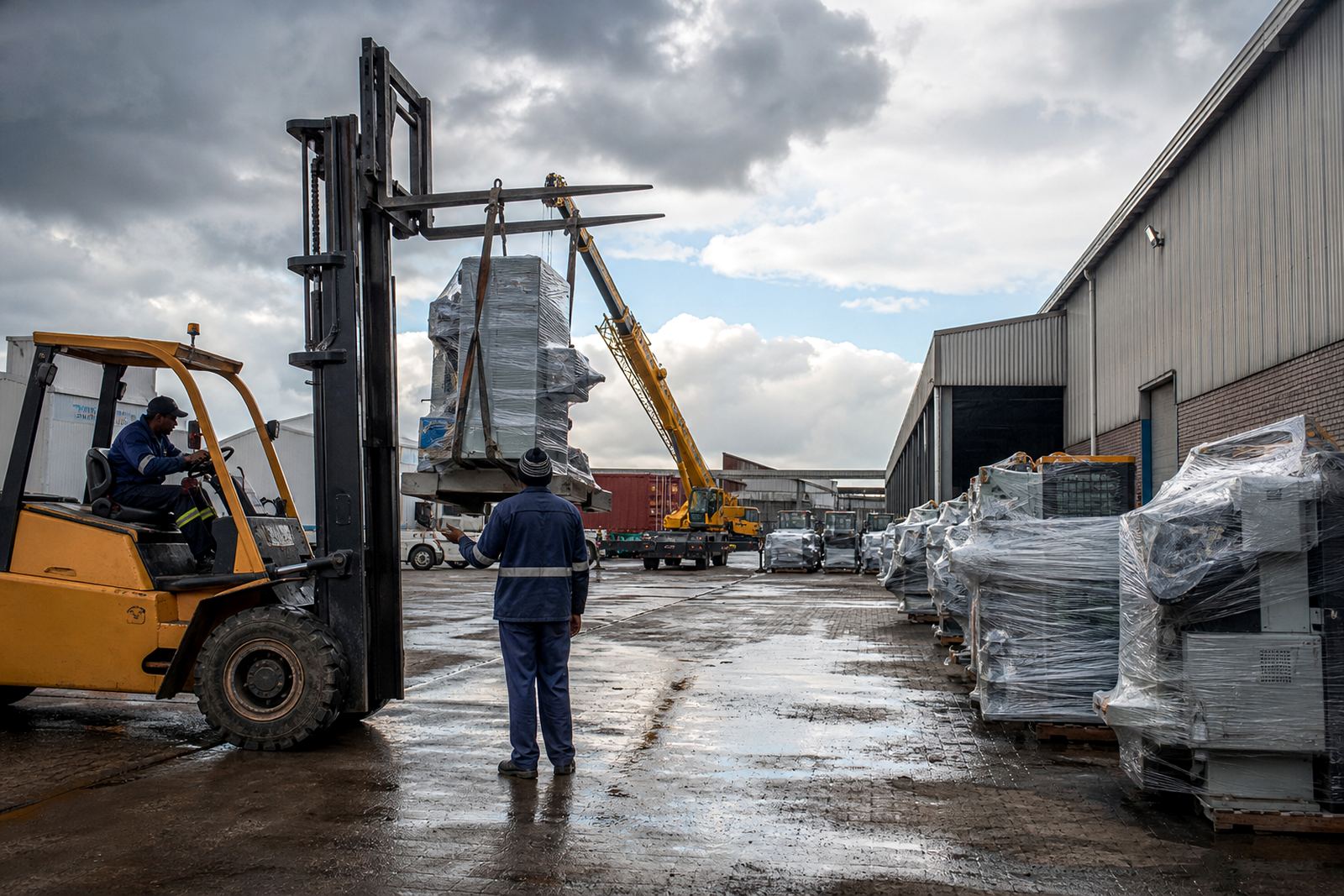
When it is time to remove machinery, a collection plan is essential. A truck alone is not enough. The team needs to know the load weight, dimensions, access route, doorway heights, floor strength and whether lifting gear is required. That is especially important for older industrial sites where ramps are narrow, floors are worn or the loading bay is shared with ongoing operations.
Before collection day, the seller should confirm what needs to be disconnected, drained, unbolted or made safe. If the machine still holds oils, coolant or compressed air, that must be handled properly. In coastal cities like Durban or Gqeberha, extra care is wise if rust or humidity has affected fasteners and fittings. Near the coast, seized bolts can be a real nuisance and a rushed pull can damage both the machine and the floor.
- Match the lift equipment to the machine size and site access.
- Measure doorways, gates and turning space before the crew arrives.
- Confirm whether the site needs a permit or security clearance for collection vehicles.
- Agree on who signs off once the machine leaves the premises.
Security, Documentation and Handover Matter Too
Shop floor safety is not only physical. It also depends on clear paperwork and controlled handover. Every site should know which items are being viewed, which are being sold and which are staying behind. That avoids confusion when several machines sit in the same line or yard. It also helps when different departments use the same space and nobody wants a mix-up at the gate.
A simple handover record should show the asset description, serial or identification details if available, the condition noted at inspection and who authorised collection. Keep the process calm and traceable. If a machine is being sold as is, the site still needs to understand that it must be made safe for removal and that access can change quickly when production schedules or municipal rules affect working hours.
For sellers in Johannesburg, Pretoria, Midrand or Germiston, a clear gate process can save time during busy traffic windows. If a collection crew arrives late and rushes through security, the chance of an error goes up. Slow is better than sorry when heavy machinery is moving.
What Machine Africa Looks For on Site
When Machine Africa handles on-site valuations, lotting, cataloguing or collection coordination, the focus is on safety first and order second. That means checking the layout, identifying hazards and making sure each machine can be assessed without exposing staff or visitors to unnecessary risk. It also means planning the sequence of work so that inspection, photography, viewing and removal do not interfere with each other.
The same approach suits sellers and buyers across South Africa, whether the site is in Cape Town, Durban, Gqeberha, Pretoria or Johannesburg. A well-run floor gives everyone confidence and usually leads to better decisions because the machinery can be seen properly and moved without pressure.
For industrial sites, good safety is practical, not dramatic. It is about clear access, steady communication and the discipline to stop when conditions are not right. That simple habit protects people, equipment and the value sitting on the floor.