Why utility checks matter before a machine is sold
When we assess used industrial machinery, the machine itself is only part of the picture. Buyers also want to know what it needs to run safely and consistently on their own site, whether that is in Germiston, Pretoria, Durban or a coastal factory in Gqeberha. A press, compressor, saw line or packaging machine can look ready to work, but if the utility match is wrong the buyer may still face downtime on day one.
That is why power and utilities form part of many inspections and auction discussions. A valuation is an informed opinion of value, not a promise of what the equipment will fetch. If the utility requirements are clear, buyers can make better decisions and sellers usually avoid last minute objections during viewing days or after the lot is awarded.
- Check voltage, phase and frequency against the buyer site
- Confirm current draw and start up demand where available
- Note air, water, steam, drainage or extraction needs
- Identify any special cabling, plugs or isolation gear required
Power supply details buyers ask for first
Power is usually the first utility question on an industrial machine. Buyers want to know whether it runs on single phase or three phase, what voltage it needs, and whether the motor or drive system will start under their supply conditions. In South Africa, many sites work around variable supply quality and load-shedding, so buyers often want to know whether a machine has memory loss risks, warm restart issues or control faults after an outage.
For valuation and auction planning, a clear power note helps us compare like with like. A machine that needs a dedicated supply and proper protection may suit a large plant better than a smaller workshop. If the machine was last tested at a site in Kempton Park but will be moved to Durban, the buyer may also consider cable lengths, breaker sizes and the cost of installation once it lands.
- Motor size and number of motors
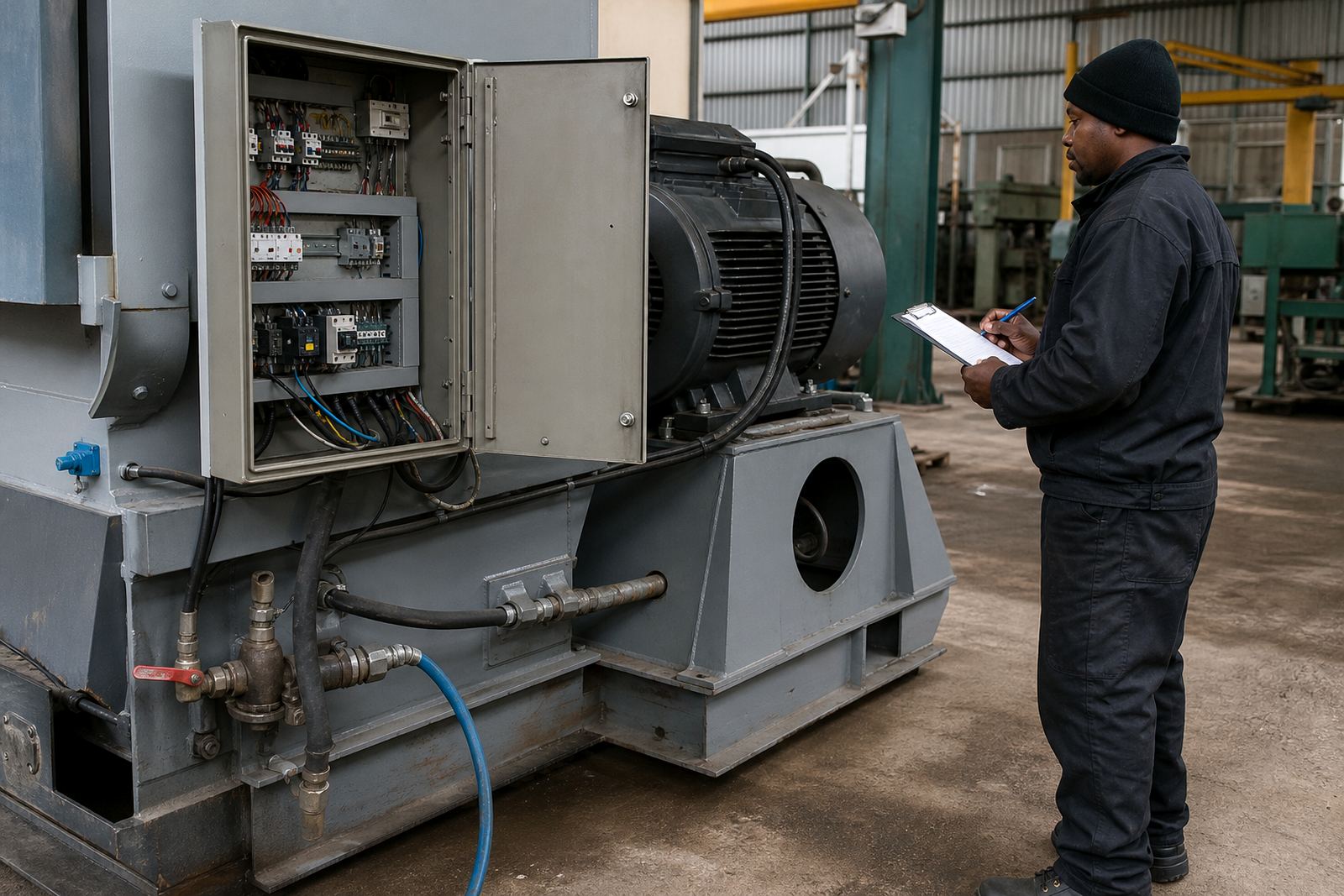
- Control panel condition and visible damage
- Any signs of heat, burnt contacts or loose wiring
- Whether the machine was tested under load or only switched on
Air, water and extraction can change the deal
Power is not the only utility that matters. Many machines need compressed air, cooling water, vacuum, dust extraction or fume removal to operate properly. If those services are not available on the buyer’s site, the machine may still be suitable but the cost and effort to install support systems should be factored in. That is especially true for plants being moved between Johannesburg and Cape Town, where site layouts and municipal rules can differ more than people expect.
We also see this on auctions where equipment is sold from a closed factory or a site under pressure to clear space quickly. If the auxiliary systems are missing, buyers need to know whether they are buying a complete working package or only the main unit. It sounds obvious, but it is where many misunderstandings start.
- Compressed air pressure requirements
- Water feed and discharge points
- Cooling requirements and hose condition
- Dust, fumes or chip extraction needs
How utility notes affect catalogue clarity
A good catalogue does more than name a machine. It should tell buyers what they need to know to judge fit, transport and recommissioning. That includes the power requirement, visible utility connections, and any missing parts that would affect a restart. If we are preparing lots for auction, these details help keep viewing days focused and reduce confusion when buyers compare similar equipment.
Clear utility notes also help when there are several machines on the same site. A seller may have one unit with a standard supply and another that needs a heavier service, extra cabling or a larger compressor. Without that detail, a bidder can only guess. Guessing is not a good basis for an opinion of value, and it is not helpful when closure support is needed after the sale.
- State power requirements in plain language
- Separate confirmed facts from visible assumptions
- Record any missing leads, guards or control parts
- Note whether manuals or wiring diagrams are available
Local conditions can affect installation and running
South African sites are not all alike. A machine moving from a dry inland workshop to Durban can face coastal humidity that affects electrics, steel surfaces and stored components. In Pretoria, heat and dust can build up around panels and motors. In Cape Town, some buyers are extra careful about corrosion and proper earthing, especially where machinery has been standing unused for a while. These are practical matters, not theory.
We also pay attention to site access and shutdown timing. If a plant is operating under municipal restrictions or has limited after-hours access, the move plan must allow for safe disconnection, lift access and clearance. A machine that is easy to view is not always easy to remove, so the utility side needs to be checked before any serious auction decision is made.
For example, a buyer collecting a used compressor from Kempton Park may find the unit itself is sound, but still need to arrange a matching supply, drain management and correct mounting at the new premises. If that is not planned early, the machine can sit idle after collection, which defeats the point of buying it in the first place.
What sellers should prepare before an on-site inspection
Good preparation gives buyers confidence and helps the valuation process move faster. Sellers do not need to rebuild the machine, but they should make access safe and gather any records that show how the unit was used. Even simple notes about duty cycle, maintenance intervals and last service date can help a valuer understand the condition more accurately.
It also helps to identify where the machine was plugged in, how it was protected and what auxiliary services it relied on. If there were repeated trips, voltage problems or air supply issues, say so. That honesty is useful. It lets us explain the machine properly in the catalogue and during seller representation, rather than leaving bidders to discover problems after the fact.
- Keep panels accessible for inspection
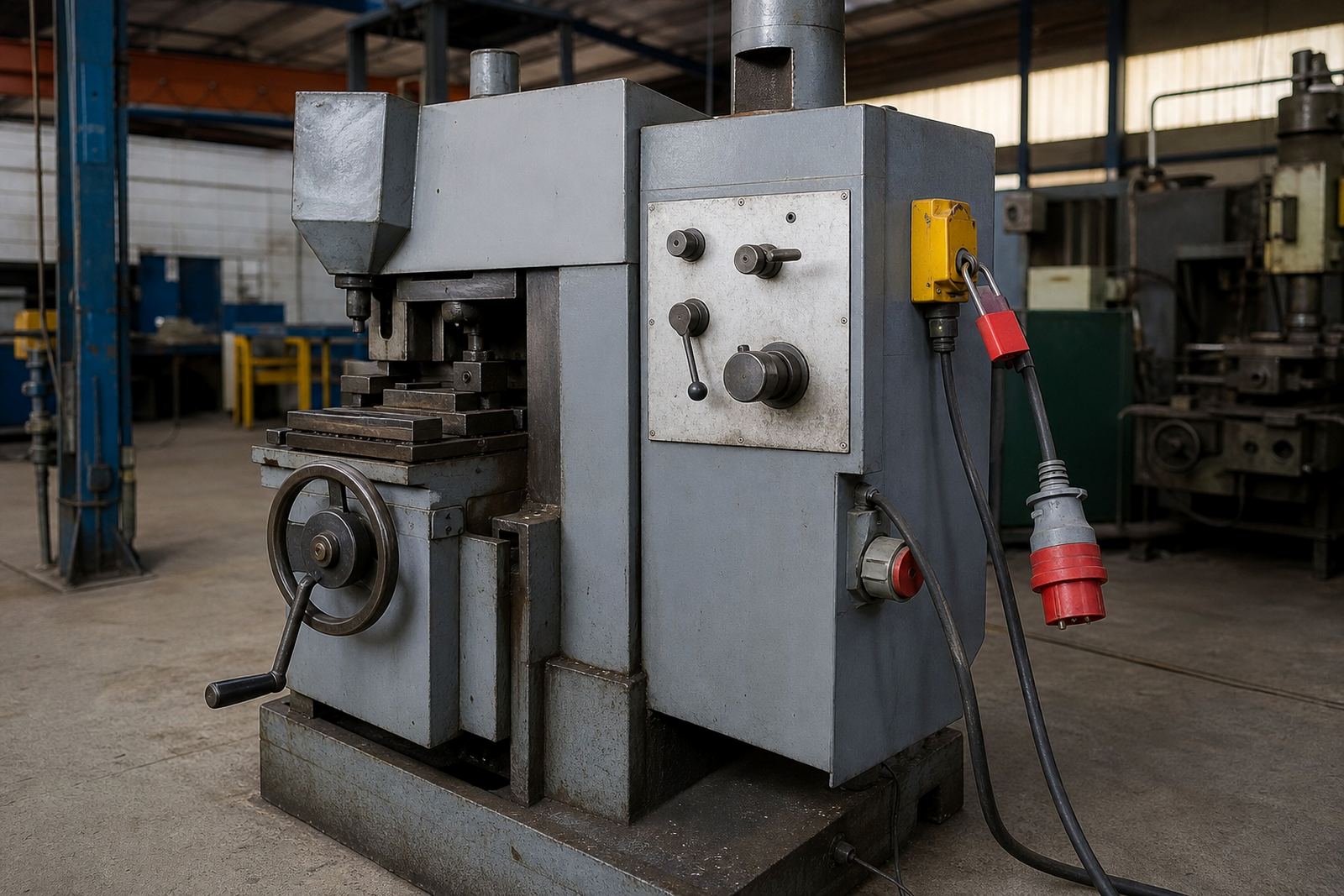
- Make sure isolators and supply points are labelled
- Remove loose materials around the machine
- Share service history and known faults
A practical approach for buyers at auction
Buyers who understand utility requirements usually bid with more confidence. They know whether the machine will suit their premises, whether they need a line upgrade, and whether the move is realistic for their timetable. That is why viewing days matter. A few minutes spent checking labels, sockets, hoses and panels can save a lot of trouble later.
Our role is to help sellers and buyers work from clear facts. On-site valuations, plant appraisals, lotting and cataloguing, and auction planning all depend on good utility information. It does not remove risk completely, but it gives everyone a better basis for decision making, which is what a fair auction process should do. In practical terms, that means fewer surprises and a cleaner handover after the sale.
When the utility story is complete, the equipment is easier to place, easier to move and easier to price within reason. That is good for the seller, and it gives the buyer a better chance of putting the machine back into production without unnecessary delay.