Why plastics machinery needs its own sales plan
Used plastics machinery is not a simple category. A buyer looking for an injection moulding press will assess clamp tonnage, screw condition, controls, mould compatibility and whether the unit can be supported with the right ancillary equipment. A recycler or compounder may be more focused on throughput, wear on screws and barrels, drying systems, cooling, and what it will take to get the line running again.
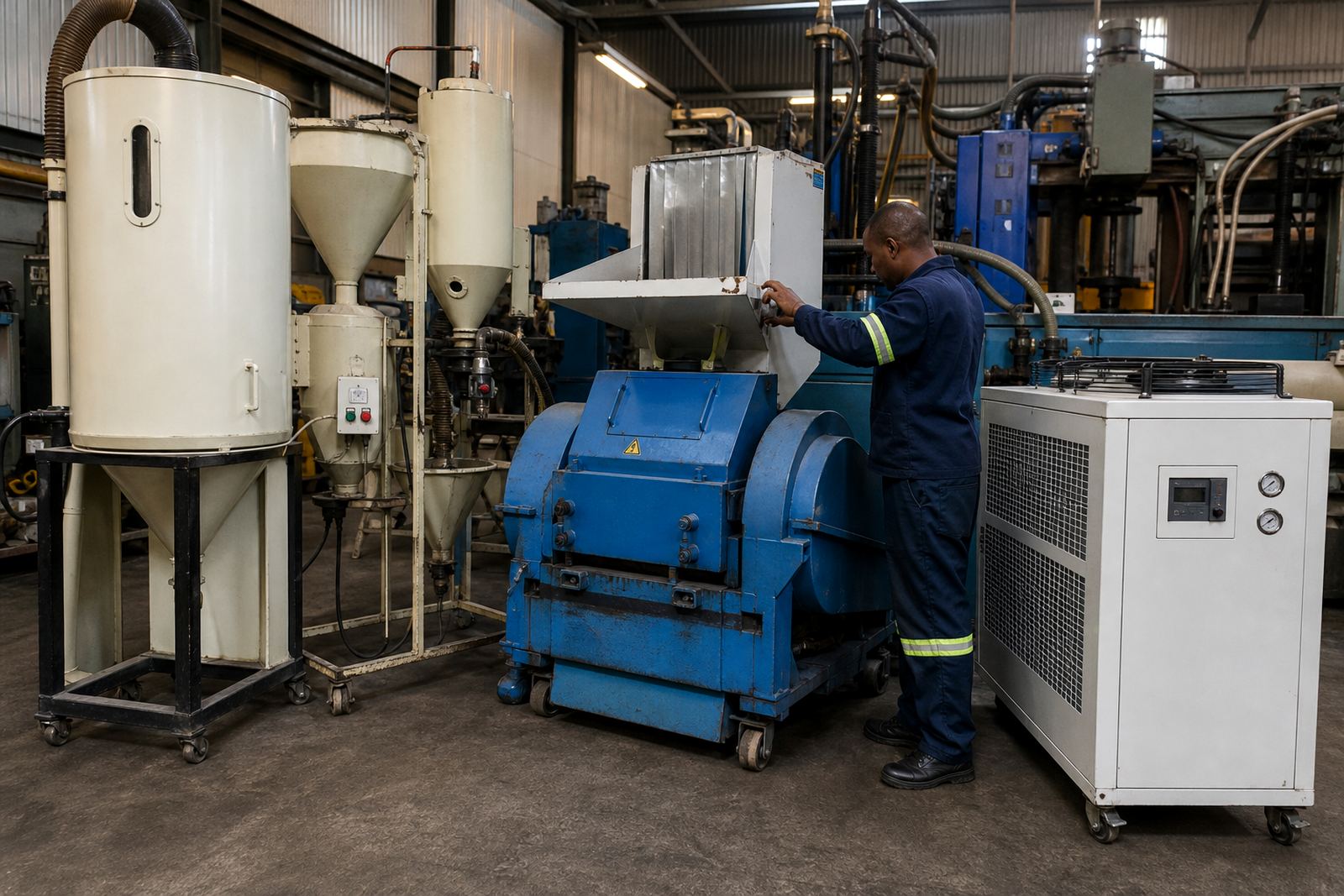
That is why plastics plant sales work best when the machinery is grouped with care. A line that includes feeders, conveyors, dryers, chillers, granulators and collection bins can be worth more together than split too early. At the same time, some items perform better as stand alone lots, especially if buyers are looking to fill a gap in an existing plant rather than buy a full site. The aim is not to force a sale price, but to create clear buying options that suit different operators.
How valuers look at plastics processing equipment
A valuation is an opinion of value based on the condition, usefulness and market interest in the assets on the day. It is not a guarantee of what a buyer will pay at auction. For plastics plants, the valuer normally looks at age, service history, installed capacity, wear parts, electrical condition, and whether the machinery has been maintained for continuous production or left idle for a long period.
In South African plants, power interruptions and stop start running can affect different machines in different ways. An older extruder that has been stored correctly may still attract interest, while a neglected dryer, granulator or hydraulic press can lose value quickly if corrosion or electrical faults have set in. Coastal humidity in places like Durban and Gqeberha can also affect panels, motors and tooling, so moisture damage should be checked early.
- Condition of screws, barrels, moulds and cutting parts
- Availability of manuals, service records and control details
- Electrical compatibility and load requirements
- Signs of corrosion, oil leaks, heat damage or missing parts
- How easy it will be to disconnect, lift and transport the plant
Grouping a plastics line so buyers can understand it
Good lotting is where the sales process starts to make sense. Buyers need to see how the equipment works together, especially when a site includes more than one process. A plastics recycling disposal may include shredders, wash tanks, dewatering units, extrusion machinery and bagging systems. A moulding plant may include presses, dryers, chillers, mould stands and conveyors. If the lots are confusing, buyers hesitate. If the lots are too broad, smaller operators are pushed out.
For that reason, lotting and cataloguing should show the plant in practical groups. A full line can be presented as a package, while critical spares or duplicate units can be listed separately. This gives more than one path to sale and helps attract both larger processors and smaller workshops.
- Line packages for buyers who want a working setup
- Core machines for buyers replacing a single item
- Ancillary equipment listed separately where it adds value
- Spare motors, heaters, controls and tooling grouped by use
What matters at inspection and viewing day
Asset inspections should be done before the catalogue is finalised, not after. On plastics plant sales, a proper inspection checks not only the main machine but also the support equipment, the power supply, the condition of pipes and hoses, the frame integrity and any signs that parts were swapped or removed. If the site has been standing during load-shedding or after a shutdown, it is worth confirming whether backup power affected start up routines or control systems.
Viewing days work best when buyers can trace the production flow from material handling to finished product or recovered pellet. Clear labels, safe walkways and working access to panels all help. Where machinery is still installed, buyers want to know whether cranes, forklifts or rigging will be needed, and whether the floor layout allows a practical lift-out. In Germiston or Midrand, for example, a tight industrial yard can make removal planning just as important as the machine details themselves.
A Kempton Park example from a recycling disposal
A recent style of disposal in Kempton Park would typically involve a mixed plastics recycling site with washing, drying and extrusion equipment in one yard. The sensible approach is to separate the line into process stages, then decide what should stay together. A washing section may have value as a group because the tanks, pumps and conveyors support each other. A granulator, by contrast, may attract a different buyer if it is listed on its own with clear motor details and blade condition.
The local benefit of a Kempton Park base is practical access. Many buyers from Johannesburg, Pretoria and the East Rand can inspect a site without major travel, while national interest still comes in from Durban, Cape Town and Gqeberha if the plant is well described. A seller does not need a fancy story. They need clear machinery descriptions, honest condition notes, good photos and a plan for collection that matches the site rules and the schedule of the next tenant or landlord.
- Confirm which machines must be sold together to keep their function clear
- List ancillary items that can be removed without affecting the main line
- Check floor anchors, utility disconnects and lifting points early
- Plan for site clearance so the buyer knows what happens after the sale
Reserve guidance, closure support and the buyer view
Reserve guidance should be based on market response and machine quality, not wishful thinking. If a plastics plant has solid maintenance records and reusable tooling, a more structured reserve may be possible. If the line is incomplete, heavily worn or built around outdated controls, the reserve needs to reflect that buyers will factor in recommissioning costs, transport and downtime. In auction work, price expectations should stay realistic from the start.
Closure support matters too. Sellers often need help with final catalogue checks, bidder questions, access arrangements, removal timing and the close out of the site after the auction. Buyers, on the other hand, want certainty about what is included, how the assets are grouped and when collection can happen. That is especially true for plastics machinery, where moving one missing hopper or panel can delay the whole start-up.
Why plastics plant sales reward clear local knowledge
Plastics plant sales work best when the process is handled by people who understand industrial sites, transport constraints and the practical side of equipment removal. A machine that looks similar to another may have very different value once size, wear and support systems are checked properly. The same applies to recycling disposals, where a line can be useful only if the buyer understands how the pieces fit together.
For sellers across South Africa, from Cape Town to Pretoria, clear grouping and fair valuation give buyers confidence. For buyers, it means they can compare lots properly and decide whether to buy a complete plant, a partial line or a single machine. That is the point of a good auction process: not forcing every item into the same mould, but presenting the plant in a way that matches how real operators work.