What buyer documents are for before removal
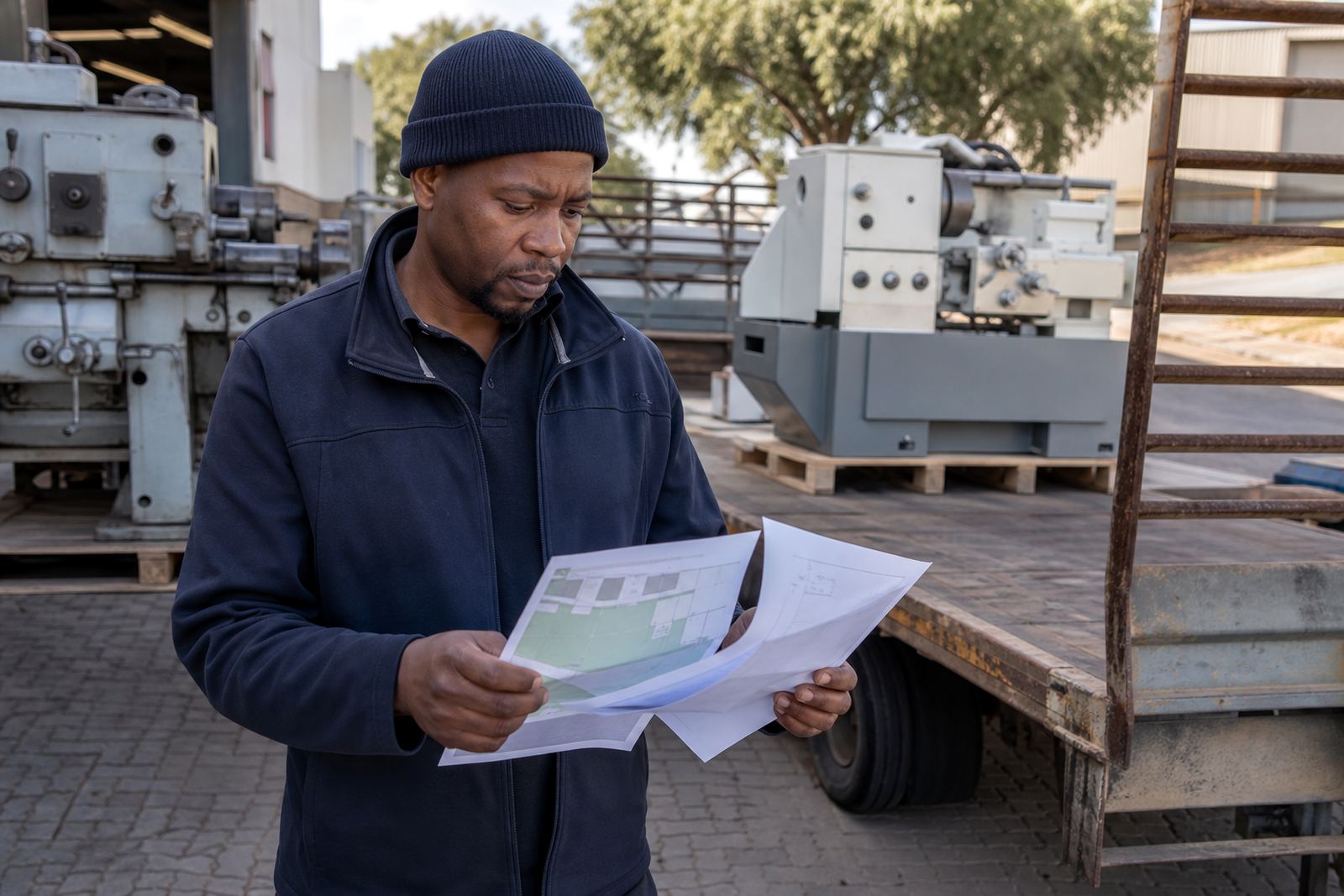
Buyer documents are the paper trail that supports a proper handover after a sale of used industrial machinery. They help show what was bought, where it is located, who may collect it, and any site rules that must be followed before the unit is loaded and taken away.
In practice, these records protect both sides. The seller can show that the asset was released correctly, while the buyer can prove authority to remove it from a factory floor, workshop or warehouse. For plant in Johannesburg, Pretoria, Durban, Cape Town or Gqeberha, this becomes even more useful when a removal team must work around gate control, shift hours, landlord rules or harbour access requirements.
The core records buyers should review first
Not every sale needs the same bundle of papers, but buyers should ask for the basics early. That gives the removal team time to plan a safe lift, arrange access, and make sure the right people are present when the machine is collected.
- Lot or item identification, so the correct machine is removed
- Sale confirmation or buyer instruction, showing who is authorised
- Site address and contact person for collection day
- Any loading notes, access limits or working-hour restrictions
- Condition notes or inspection summary where available
- Equipment dimensions, weight and any dismantling notes
These records do not replace a physical inspection. They simply help the buyer and the removal contractor know what to expect, and where the risks may be.
Why site information matters as much as the machine
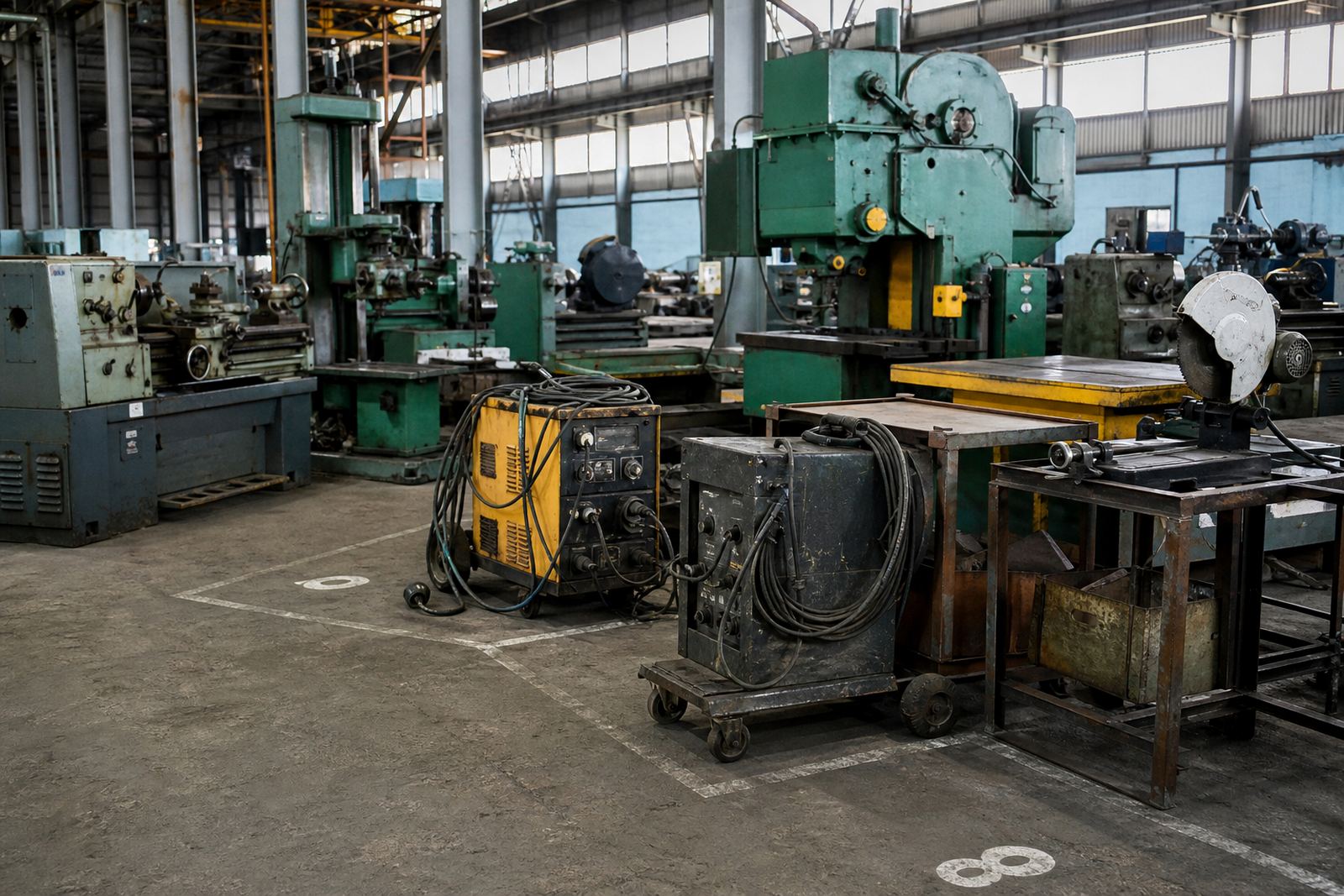
Many delays happen because the machine is ready, but the site is not. A buyer may have a truck and labour lined up, yet still lose half a day because the gate requires advance booking or the loading area cannot take a heavy vehicle. On older industrial sites, a narrow driveway, low beam, uneven yard or weak floor slab can change the whole removal plan.
Ask for site information that covers access roads, loading bay height, forklift use, crane requirements, and any permit or induction steps. In Kempton Park and Germiston, for example, some industrial yards have strict receiving hours and security checks. Near coastal areas such as Durban and Gqeberha, buyers should also plan for rust-prone fasteners, damp panels and slippery floors if the weather turns rough.
How buyer documents support safe removal and transport
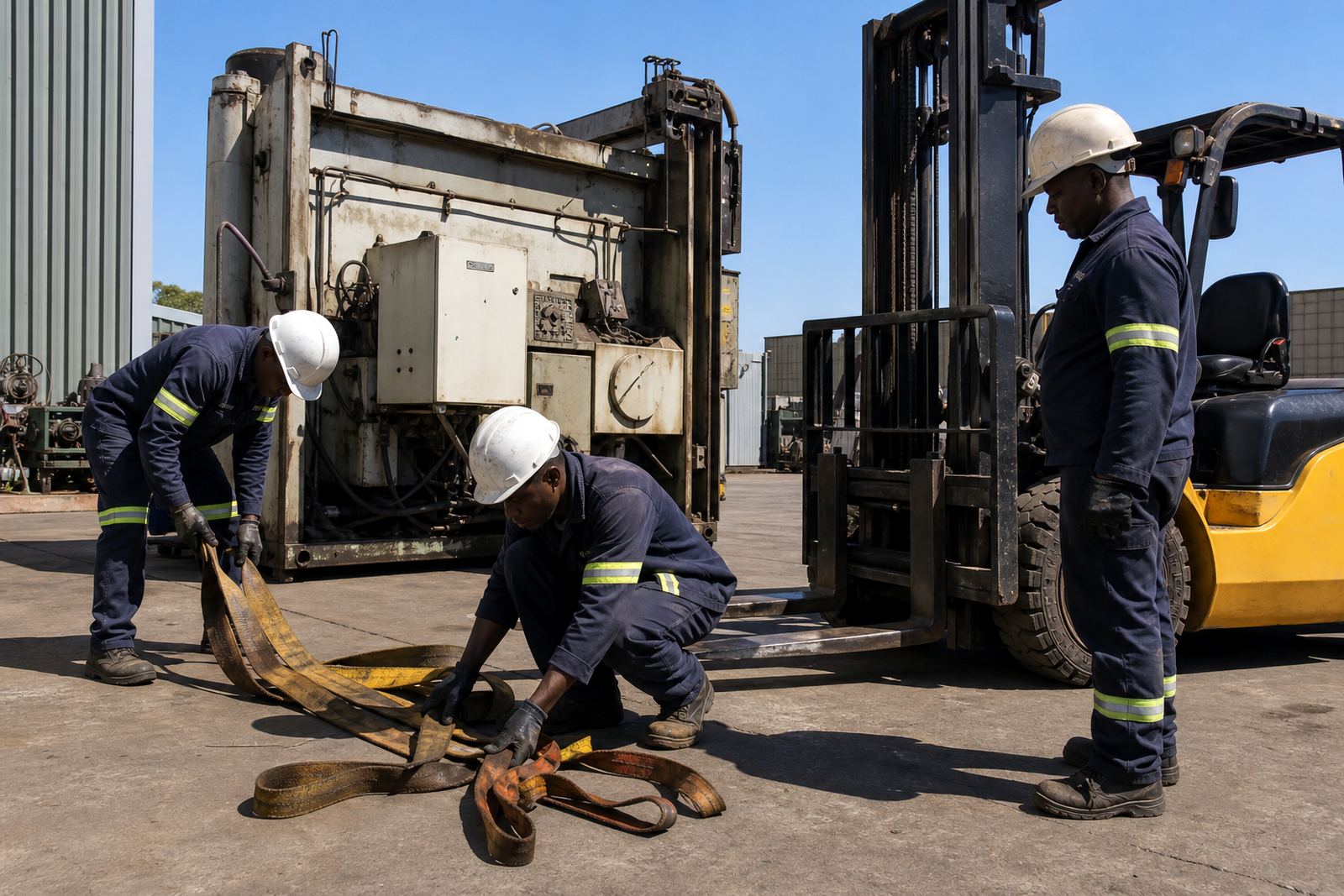
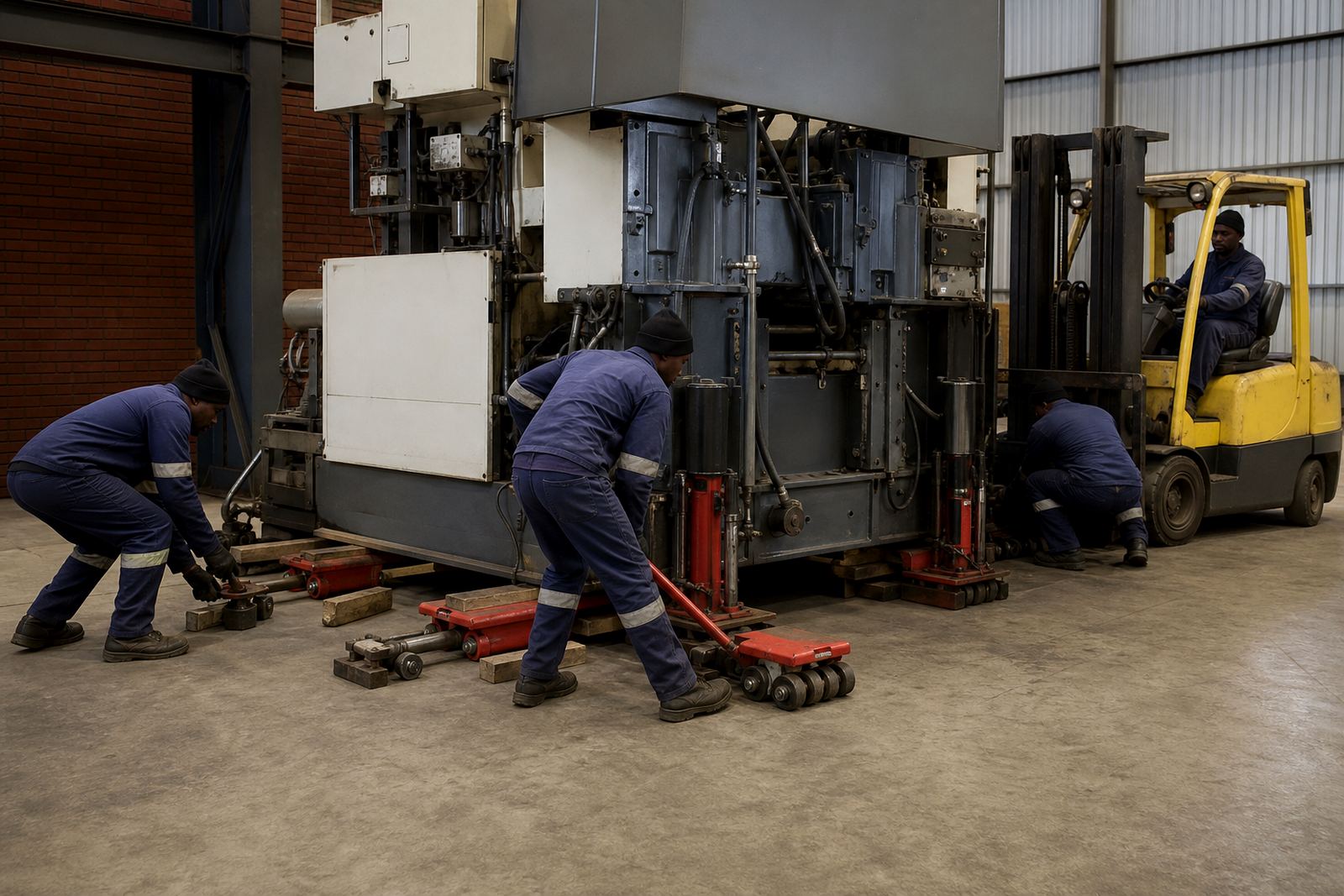
Once the machine is released, the removal team still needs to work carefully. Buyer documents help match the transport method to the actual job. A small lathe may move on rollers and a pallet jack, while a press, compressor or packaging line may need rigging, skates or a crane. If a machine is partly stripped, that must also be noted before the team arrives.
A clear document pack usually includes:
- Photo records of the machine as viewed before removal
- Known power requirements and any isolated connections
- Information on anchor bolts, footings or base plates
- Notes on loose tooling, guards, belts or accessories
- Any seller instructions for dismantling or site protection
This is especially important where load-shedding has affected production equipment. Control panels, drives and batteries may need extra care if a site has had recent power interruptions or if the machine has sat unused for some time.
What buyers should check on auction and valuation paperwork
Valuations and auction documents are useful, but they should be read properly. A valuation is an opinion of value based on the information available at the time. It is not a guarantee of sale price, and it does not promise that a machine will suit every buyer's purpose. Auction paperwork should also be checked against the actual lot details before any removal is booked.
Look for matching serial references if recorded, the correct machine description, and any exclusions such as tooling not included in the lot. If the machine has been moved, repaired or altered since inspection, say so. Even a small mismatch in notes can create delays at collection, especially when several lots are being removed from one site in a single day.
A practical local example from a Kempton Park collection
Say a buyer in Midrand secures a used guillotine from a Kempton Park industrial site. Before the collection crew is sent in, the buyer should review the lot record, the site address, the loading access notes and any instructions on who can sign the release. If the machine stands near a wall, or if there is no forklift on site, that changes the removal plan from the start.
On the day, the team may need proof that the correct buyer is collecting the machine, plus any site induction or PPE requirement set by the premises. With the right documents in hand, the handover is quicker and there is less room for confusion. That matters when the yard is busy, the weather is poor, or the machine must be moved before the next shift begins.
Simple habits that help buyers avoid hold-ups
Good document handling is often about preparation. Buyers who keep their records in one place and read the site notes early usually save time later. It also helps to appoint one contact person to deal with the seller, the removal contractor and the site security team.
- Read the lot information before booking transport
- Confirm who will sign at release
- Check whether the machine needs dismantling first
- Share the loading time and vehicle details with the site
- Keep copies of all collection instructions and inspection notes
That sort of planning keeps the process orderly and avoids unnecessary waiting. In industrial removals, a clear paper trail is often just as important as the machinery itself.