Why compressor age is only the starting point
Age gives a first impression, but it does not tell the full story. A 12 year old compressor that has worked steady shifts in a clean workshop may present better than a newer unit that has been started and stopped hard, run in dust, or left outside in coastal humidity. For valuation work we look at the age plate, yes, but also the operating hours, the type of duty and how the machine was cared for.
In practical terms, age often affects the expected remaining working life, parts availability and the appetite of buyers at auction. A well kept machine can still attract good interest if it starts properly, holds pressure and shows no major leaks. A neglected compressor may look complete yet still need expensive work before it can be put back into service.
- Check the manufacturing year against the stated hours and service records.
- Look for corrosion on tanks, pipework and fittings.
- Test whether the unit reaches operating pressure without strain.
- Confirm if the compressor has been stored under cover or exposed to the weather.
Duty type changes the picture more than many owners expect
Two compressors of the same age can value very differently if one ran light workshop duty and the other was pushed through long shifts on a production line. Duty type affects wear on motors, belts, cooling systems and control components. It also changes the likely repair history, because some machines are service friendly while others have had repeated attention just to keep them going.
For an assessment, it helps to know whether the unit served as a standby compressor, a daily production machine or a mobile site unit. Each use case brings different wear patterns. A unit that cycled gently with proper rest periods can be in far better order than one that ran continuously in a hot room with poor ventilation and load-shedding starts.
- Production duty often means higher wear on bearings and valves.
- Standby units may show age-related deterioration from sitting idle.
- Mobile compressors can suffer from vibration, dust and rough transport.
- Units exposed to repeated power interruptions may have stressed starters and controls.
Support equipment can add value or take it away
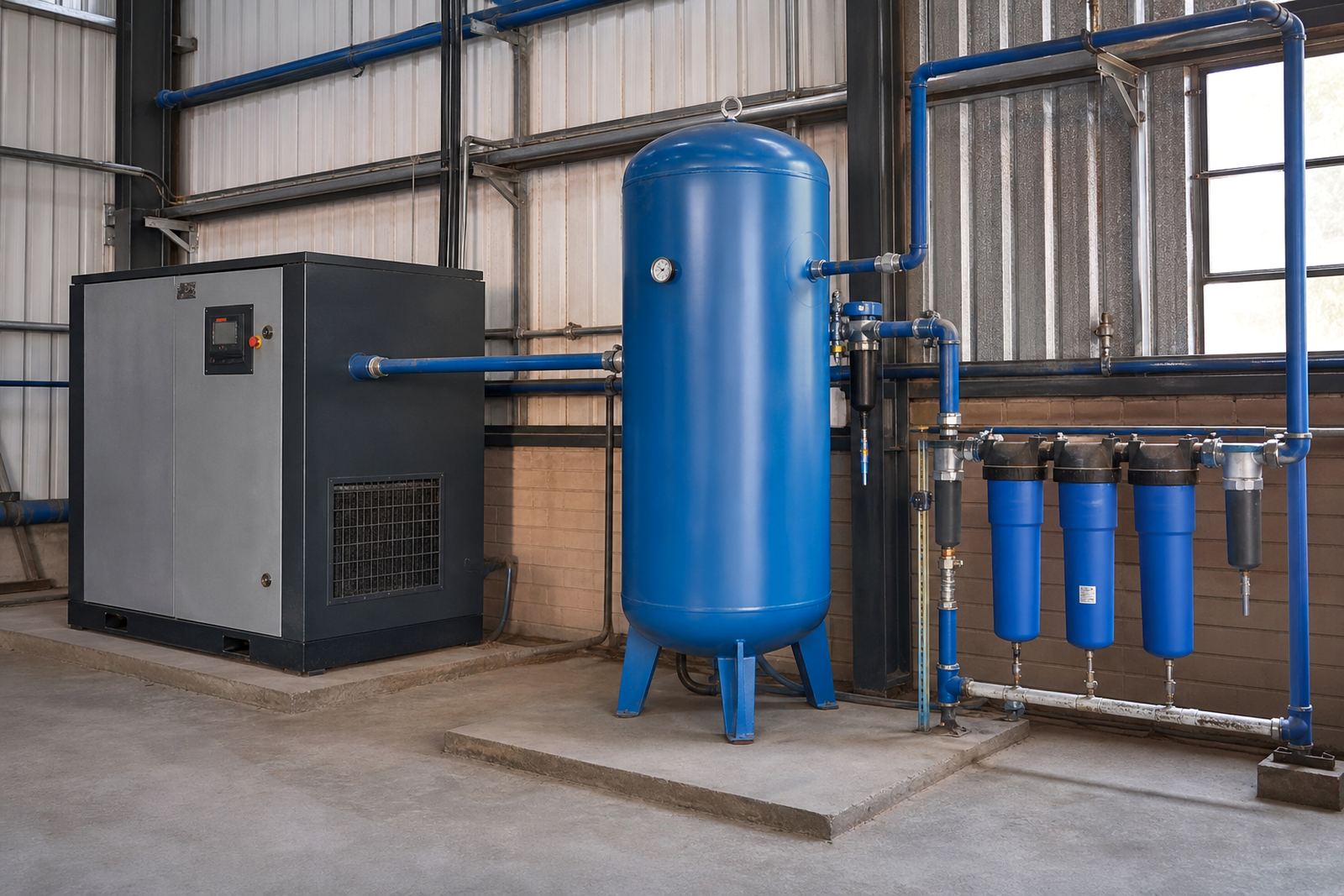
A compressor is rarely sold in isolation. Air receivers, dryers, filtration, pipework, aftercoolers and starter panels all influence the final assessment. If these items are present and in serviceable condition, they can widen the buyer pool because the machine is closer to ready use. If they are missing or damaged, the buyer must budget for extra work and that affects the opinion of value.
Support equipment is also where hidden problems often show up. A good compressor with a tired receiver or blocked dryer may not perform well on site. In coastal areas the extra moisture in the air can shorten the life of fittings and increase rust in tanks. In Gauteng, dust and heat can create other problems, especially where equipment sits near workshops or open loading bays.
- Air receivers should be checked for rust, dents and certification history where applicable.
- Dryers and filters should be complete and correctly matched to the compressor.
- Pipework should be free of leaks, damaged joints and makeshift repairs.
- Control panels and isolation gear should be intact and clearly labelled.
What a valuer looks for on site
On-site valuation is about evidence. We listen for unusual noise, watch the start up sequence and inspect the frame, motor, belts, gauges and electrical connection. If the unit is oil lubricated, oil condition matters. If it is an oil free unit, the condition of the compression stage and cooling arrangement becomes more important. The aim is not to guess, but to form a reasoned opinion based on what can be verified.
We also ask about the machine’s working environment. A compressor kept in a factory in Germiston may have very different wear patterns from one operating near the coast in Durban or in a dusty yard in Midrand. Age and duty need context. Even the quality of the floor, drainage and ventilation can influence how the equipment aged.
For sellers, it helps to have service notes, manuals if available, and a clear record of any repairs. A machine with incomplete history can still be assessed, but the uncertainty is usually reflected in the valuation. That is normal and it is better to be honest than overstate the position.
Auction readiness and how it affects interest
For auction planning, a compressor that is clean, identifiable and easy to inspect usually gets better attention from buyers. Catalogue photos should show the whole unit, the serial and model details where visible, and the attached support items. If the unit is not running, that needs to be stated clearly. If it is running, the testing conditions should still be described properly so buyers understand what was checked.
Reserve guidance should be based on condition, market interest and the likely cost of recommissioning. It is not a promise of sale price, and it should not be treated as one. A reserve that is too high can suppress bidding. A reserve that is set with care may help protect the seller while still allowing the market to respond.
- Clear access for viewing days helps buyers inspect the tank, motor and fittings.
- Loose parts should be labelled so nothing goes missing before collection.
- Safety notes matter when units are disconnected or out of service.
- Good photo listing prep can reduce confusion and save time during enquiries.
A local example from Kempton Park
A Kempton Park workshop with several older compressors might assume the newest unit will carry the strongest value, but that is not always the case. If the youngest machine has corroded pipework, weak starting equipment and no service record, while an older unit has clean internals, proper ventilation and a complete dryer set, the older machine may present better to buyers. The site conditions matter too. Load-shedding, hot rooms and poor maintenance all leave a mark over time.
That is why valuation notes should separate appearance from working condition. Buyers in Johannesburg, Pretoria, Durban, Cape Town and Gqeberha want clear detail they can trust before bidding or making an offer. Sellers benefit from the same clarity because it reduces disputes later and makes the process easier to manage.
In our work from the Kempton Park base, the goal is to give a fair opinion of value and a practical path for sale whether the machine is going through auction, clearance sales or a negotiated disposal. It is about matching the equipment to the market, not overpromising what the market will do.
Useful records that make valuation smoother
Good paperwork does not replace inspection, but it does help a lot. Even a short service note or a record of major repairs can support the assessment and improve confidence among bidders. If records are missing, the machine can still be valued, just with more caution around condition and future maintenance.
- Installation date or purchase invoice, if available.
- Service history and any records of parts replacement.
- Details of the compressor type and size.
- Notes on electrical supply, starter gear and cooling setup.
- Any safety inspections, pressure vessel notes or test certificates where applicable.
For sellers and buyers alike, the main point is simple: age matters, but it does not act alone. Duty type, support equipment and site conditions can change the picture quite a bit. That is why careful valuation work stays grounded in what is seen, tested and documented.