How to Register and Participate
Buyers should register before taking part in any auction, whether attending in person in Kempton Park or joining from elsewhere in South Africa. Registration is used to confirm identity, record bidder details and make sure each buyer understands the auction conditions before bidding starts.
Where required, buyers may be asked to provide company details, identification and proof of authority to bid on behalf of a business. If a buyer is acting for a third party, the responsible person must make sure the bidder has the correct authority and understands the terms that apply to the lot.
- Register early so any questions can be resolved before bidding begins.
- Bring the documents requested for verification and account setup.
- Use only the bidder number or method issued to you for that auction.
- Ask about lot conditions, inspection times and collection rules before placing a bid.
Registration does not guarantee access to every lot. Some assets may be subject to seller approval, viewing limits or site-specific controls, especially where machinery is still installed in a working plant or is located on a managed industrial site.
Viewing Machinery Before You Bid
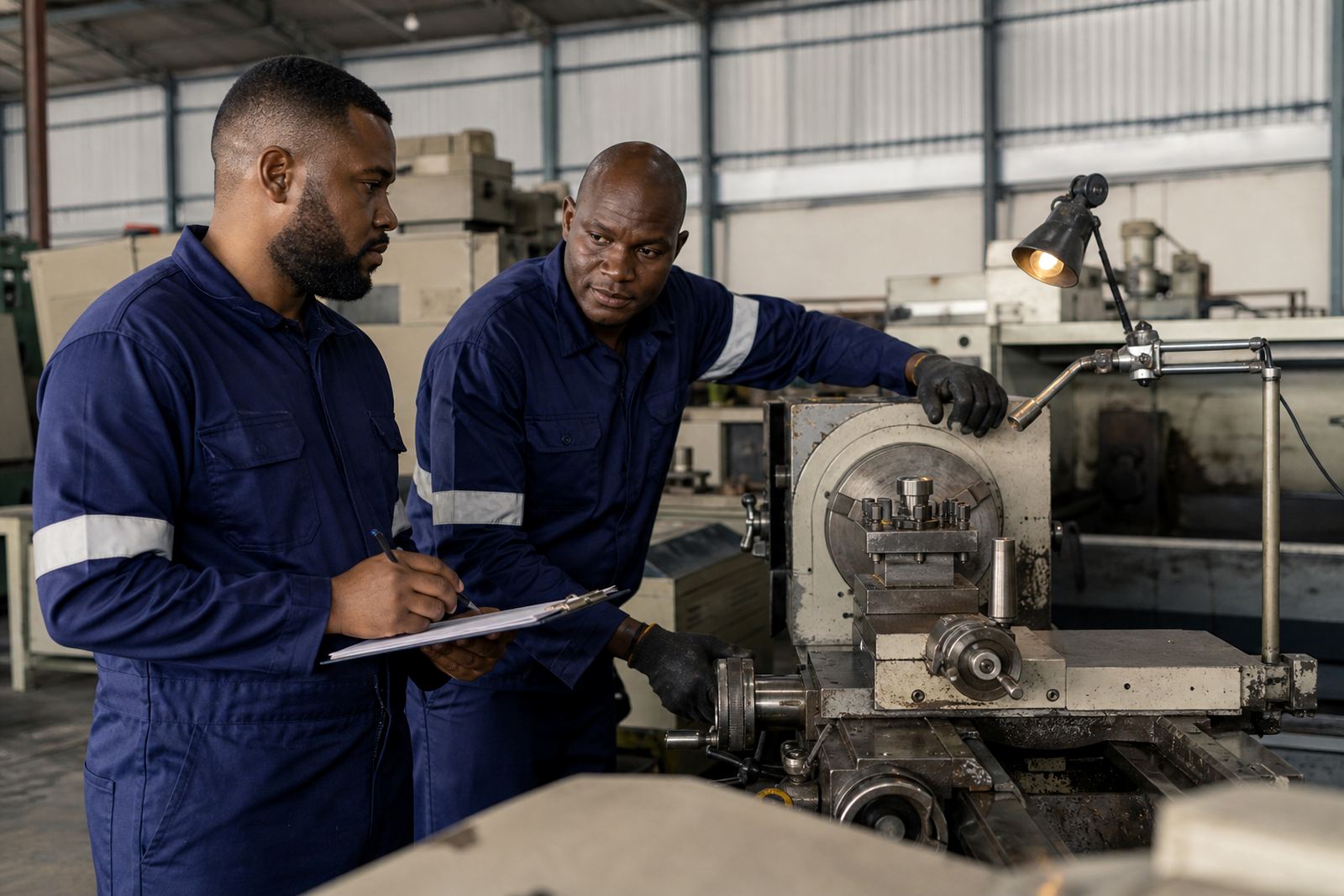
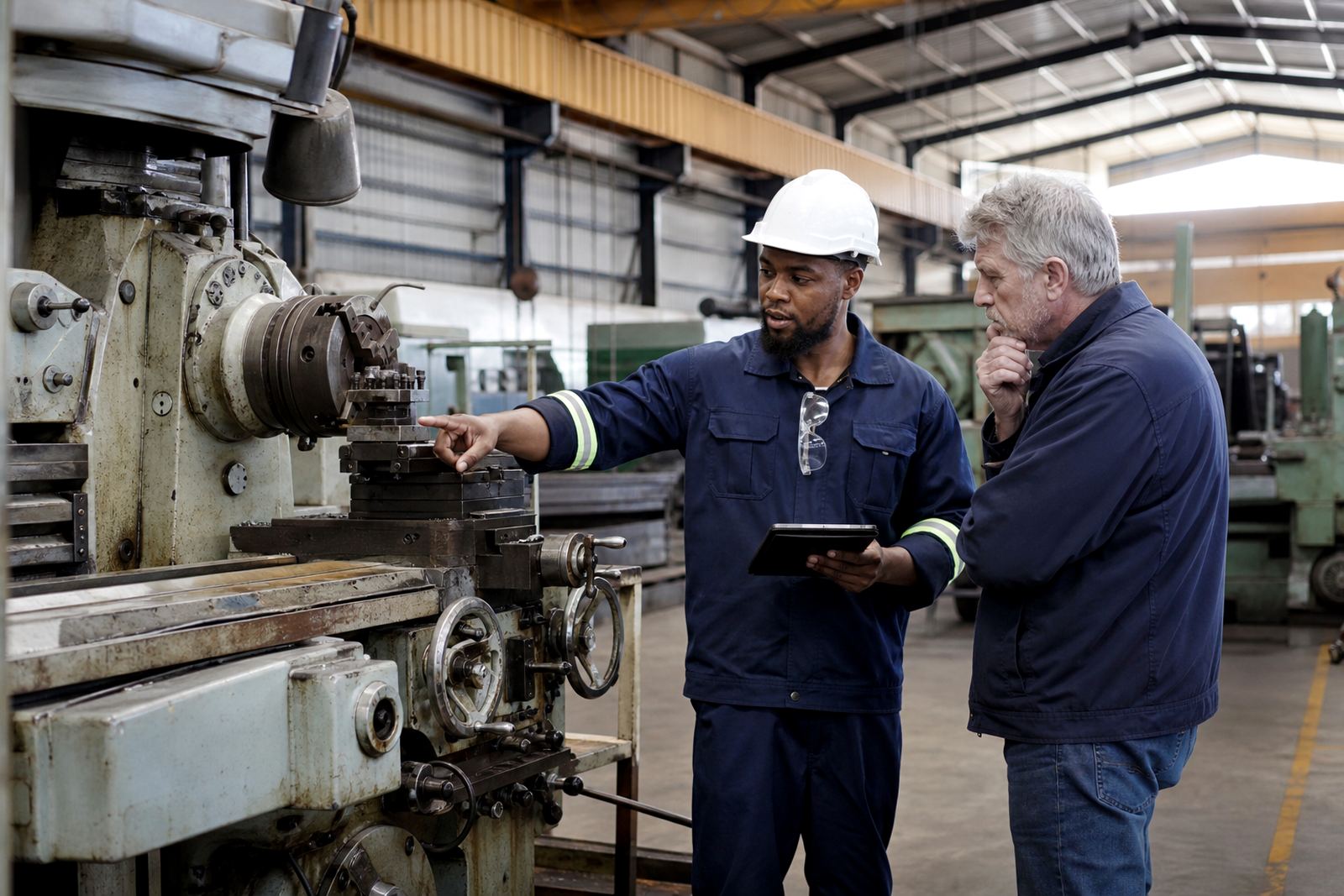
Buyers are expected to inspect machinery before bidding wherever possible. Used industrial equipment may show wear, repairs, missing parts or service history gaps, and a viewing is the best way to check whether a lot suits the intended use. Valuation notes and catalogue descriptions are there to assist, but they are not a replacement for a buyer's own assessment.
For plant in Gauteng, Durban, Cape Town, Gqeberha and other regions, viewing arrangements may vary according to site rules, load-shedding schedules, safety access and whether the machine is live, disconnected or in storage. Buyers should pay attention to access conditions, lifting points, dimensions and any visible damage.
- Check motor condition, controls, guarding and wiring where visible.
- Confirm the machine fits your power supply, floor space and handling needs.
- Inspect for corrosion, coastal humidity exposure or long storage periods.
- Note whether tooling, spares or attachments are included with the lot.
All buyers carry their own responsibility to satisfy themselves on condition and suitability before bidding. Once a bid is placed, it is treated as a serious offer and cannot be withdrawn simply because the buyer overlooked an issue that could have been checked during viewing.
Bidding Rules and Sale Outcome
Bids are accepted in the manner announced for the specific auction, whether live, timed or by another approved process. The highest accepted bid at the close of bidding is normally the winning bid, subject to the auction conditions and any reserve or seller instruction that may apply. A valuation is only an opinion of likely market value at the time of inspection, not a guarantee of sale price.
Buyers should bid carefully and only within the limits approved by their business or funding arrangement. Once a bid is accepted, the buyer is committed to the purchase and must complete the sale according to the stated process. If a reserve applies and is not reached, the lot may remain unsold or be dealt with in another approved way.
- Bids must be placed in the correct auction format and within the stated time.
- The auctioneer or sale coordinator may control increments, timing and closing.
- Any lot marked sold is subject to the auction terms and final confirmation.
- Buyers should not rely on verbal assumptions outside the published conditions.
Where disputes arise, the auction record and sale process will be used to determine what was accepted. Buyers should keep their bidder number, lot references and sale notices safe until collection is complete.
Payment and Proof Before Release
Successful buyers must pay in full according to the auction instructions before any machinery is released for collection. No item may be removed until payment has been cleared and the release process has been completed. This protects both buyers and sellers and helps keep the collection process orderly at busy yards and industrial sites.
Buyers should make sure their payment references are correct and that they can provide proof of payment when requested. If a buyer needs invoices, company records or release confirmation, these must be arranged through the normal process rather than at the collection gate. Payment delays can affect loading times and may result in storage or access complications, especially where the site has limited operating hours or shared access with other tenants.
- Wait for payment clearance before arranging transport.
- Do not send a truck or crane until release is confirmed.
- Keep copies of all sale paperwork and payment records.
- Check any deadlines that apply to collection and site clearance.
We do not give tax, accounting or finance advice. Buyers should obtain their own guidance if they need help with internal approvals, record keeping or any external compliance issue.
Collection, Loading and Site Safety
Collection must be arranged in line with the site rules and the release instructions issued after payment. Buyers are responsible for removing their purchases safely and on time, using suitable transport, labour and lifting equipment. On industrial sites in Kempton Park, Germiston, Midrand and across the country, access may be restricted by operating machinery, forklift traffic, narrow gates or limited manoeuvring space.
Some lots are heavy, awkward or bolted down and may require a rigging team, crane truck or a specific disassembly plan. Buyers should check the asset's size, weight, access route and lifting requirements before sending collection crews. Any damage caused during removal is for the buyer's account where the buyer or their contractor is responsible.
- Bring the correct transport and lifting support for the machine.
- Follow all site inductions, PPE rules and loading instructions.
- Protect floors, walls and equipment nearby during removal.
- Remove all purchased items and leave the area tidy unless agreed otherwise.
Collections should be planned around local conditions, including power cuts, weather, public holidays and traffic on industrial routes. Buyers who leave items uncollected beyond the permitted period may face further handling arrangements, so it is best to collect promptly once release is given.
What Happens If a Buyer Does Not Complete the Sale
If a buyer does not complete payment or collection in line with the auction terms, the lot may be treated as not properly taken up and further action may follow under the sale rules. This can include cancellation of the sale, re-offering the lot, recovery of costs linked to storage or handling, or other steps allowed by the conditions of sale.
Buyers should not assume that a lot will remain available indefinitely after the auction closes. Once a machine is sold, the timetable for payment and removal starts immediately unless the auction notice says otherwise. If a buyer runs into a problem, the issue should be raised as early as possible through the enquiry form on the contact page so the team can review the position and advise on the next available step.
Buyer Support Across South Africa
Machine Africa supports buyers from Johannesburg, Pretoria, Durban, Cape Town, Gqeberha and surrounding industrial areas, with a base in Kempton Park. The team handles buyer queries on auction conditions, lot information, viewing access and collection coordination, with each matter handled in a practical way. Siyabonga Mthembu leads the business, supported by Naledi Khumalo, Pieter van der Merwe, Ayesha Ismail, Thabo Molefe, Johan Botha and Lerato Nkosi.
Because machinery sales can involve multiple sites, different asset types and changing operational conditions, buyers are encouraged to read each auction notice carefully and ask questions before bidding. Clear communication before the sale usually avoids delays after the sale, which helps both first-time buyers and regular industrial purchasers move through the process with less hassle.